
Surprising Facts About Jeff Gordon’s Career
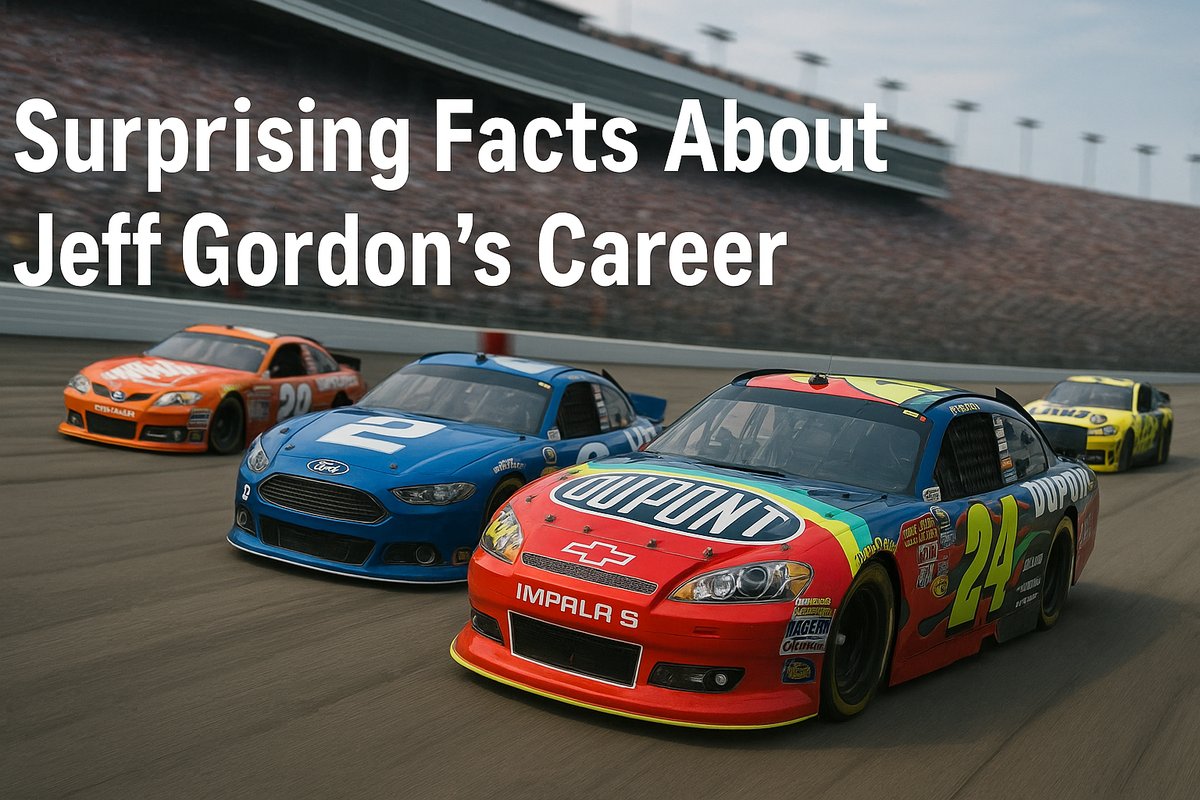
Y’all, Jeff Gordon’s story hits different when you’re a third-generation NASCAR fan like me, raised trackside in Charlotte where the smell of burning rubber and high-octane fuel was just part of Sunday dinner. Growing up in Charlotte, NASCAR wasn’t a hobby — it was life, and my granddaddy used to sit me down and tell tales about how these superspeedways came to be. Jeff’s path from a California kid to a four-time Cup Series champion with Hendrick Motorsports is one for the ages, full of twists that still shape how we look at driver profiles today.
Born in Vallejo, California, back in 1971, Gordon started out racing quarter midgets at age five and dominated those local tracks before stepping up to sprint cars. Now here’s a surprise that bucks the usual Southern roots narrative: after his family moved to Pittsboro, Indiana, he sharpened his skills on pavement ovals in the Midwest instead of the dirt tracks folks around Daytona and Talladega swear by. That foundation carried him to open-wheel success, including the USAC Midget championship in 1990 at just 19. He rolled into the Cup Series with a debut at Atlanta in 1992, finishing 31st, then grabbed Rookie of the Year honors in his first full season with Hendrick in 1993. My grandfather watched this track get built at Charlotte Motor Speedway, and it was right there in ’94 that Gordon notched his first win, proving he could adapt lightning-fast to the big ovals like Daytona and Talladega with setups that changed how we think about aerodynamics.
Those championship runs in 1995, 1997, 1998, and 2001 came with stats that still make jaws drop. He racked up 93 career Cup wins, third all-time, and in 1998 alone he took 13 victories while leading more than 2,000 laps, tying that modern-era record. His open-wheel background gave him an edge on road courses like Watkins Glen and Sonoma, spots where plenty of stock car specialists struggled. Consistency at places like Michigan and California Speedway helped build Hendrick’s program, and that 1997 title fight down to the wire at Atlanta showed just how he thrived under pressure at restrictor-plate tracks.
What really sets Gordon apart from his peers is how quickly he mastered the technical side of NASCAR that most drivers take years to understand. Coming from open-wheel racing, Gordon brought a different mentality to stock car setup and feedback. While traditional NASCAR drivers grew up reading dirt and learning feel through years of oval racing, Gordon’s experience across multiple racing disciplines meant he could communicate suspension changes in ways that revolutionized how crew chiefs approached car development at Hendrick. Ray Evernham, his legendary crew chief from those early championship years, recognized this immediately and built a program that leveraged Gordon’s technical acumen alongside his raw speed.
The 1995 season deserves special attention because it marked a watershed moment for the sport. Gordon’s 7 wins that year might not sound like a lot by today’s standards, but his consistency and pole position record were absolutely dominant. He qualified up front week after week, and more importantly, he showed that you didn’t need to be a grizzled veteran with 20 years of NASCAR experience to win at the highest level. This opened doors for a new generation of talent and challenged the old guard’s assumption that NASCAR was fundamentally different from other racing series. Gordon’s success proved that great racing talent is transferable, and that adaptability matters more than pedigree.
The rivalry with Dale Earnhardt lit up the sport like nothing else, with moments like the 1995 Bristol dust-up, yet Gordon’s sportsmanship always stood out. Those on-track battles only sharpened his edge, and the contrast between Gordon’s clean, calculated driving style and Earnhardt’s aggressive approach created compelling narratives that captured mainstream sports media attention. This rivalry didn’t just sell tickets — it legitimized NASCAR as a sport where talent and competitive intensity could captivate audiences the same way that basketball or football rivalries did. Gordon’s ability to stand toe-to-toe with Earnhardt while maintaining professionalism elevated the entire sport’s image.
One aspect of Gordon’s career that doesn’t get enough credit is his consistency at intermediate tracks. While everyone remembers his superspeedway dominance and road course excellence, Gordon’s record at 1.5-mile tracks like Las Vegas, Kansas, and Charlotte is equally impressive. These tracks have always been the backbone of the NASCAR schedule, and Gordon’s ability to run top-five finishes week after week on these circuits gave Hendrick a massive points advantage over competitors who might win one or two races but lacked consistency. This is actually the blueprint that his former protégé Chase Elliott has followed to great success, proving that Gordon’s influence on driver development and race strategy extends far beyond his retirement.
After retiring following the 2015 season at Homestead-Miami, he slid right into the Fox Sports booth while serving as a driver-coach for Hendrick, mentoring Chase Elliott. His marketing deals and foundation work lifted the whole sport, and he earned induction into the NASCAR Hall of Fame in 2019. What’s particularly interesting about Gordon’s post-racing career is how he’s remained relevant without overshadowing current drivers or becoming a relic of past glory. His commentary on broadcasts brings insider perspective that resonates with serious fans while remaining accessible to casual viewers, and his mentorship of Elliott has demonstrated that the principles of racecraft and mental preparation that made Gordon great are timeless.
Gordon’s 48 pole positions in the 1995 season alone — yes, you read that right — remain one of the most staggering statistical achievements in modern NASCAR. That number illustrates just how dominant he was during that era, and it shows that his championships weren’t accidents; they were the result of superior preparation, speed, and execution week after week. When you’re sitting on pole position that consistently, you control the narrative of every race and put immense pressure on your competitors before they even fire up their engines.
Key numbers tell the tale: 81 poles, the modern-era record at retirement; youngest modern-era Cup winner at Charlotte in ’94 at age 23; victories in 20 straight seasons from 1994 through 2013 across 797 starts; wins at 24 different tracks; and that 1990 USAC title starting it all. His final career statistics show 486 top-10 finishes and 147 top-five finishes, metrics that underscore how rarely he had a bad day at the track. When Gordon showed up to race, you could count on him being competitive, and that reliability made him a nightmare for competitors trying to build championship points.
The financial impact of Gordon’s success also can’t be overlooked. His marketability transformed NASCAR sponsorship, attracting major corporations that might have otherwise ignored the sport. Dupont’s long-term partnership with Gordon wasn’t just about painting a car — it was a platform for reaching millions of households every Sunday, and Gordon’s professionalism and media savvy made him an advertiser’s dream. This opened doors for subsequent drivers to land major sponsorships and helped professionalize the sport’s relationship with corporate America.
Folks, Gordon didn’t just collect trophies — he helped turn NASCAR into the national spectacle it is, and down here near Charlotte we still tip our hats to how he raised the bar for everyone chasing those checkered flags at Daytona and Talladega. His legacy extends beyond the record books and into the very fabric of how modern NASCAR operates, from driver development philosophies to marketing strategies to broadcast presentation. Every young driver coming into the sport today benefits from the standards Gordon set and the doors he opened.