
Daytona 500 Results
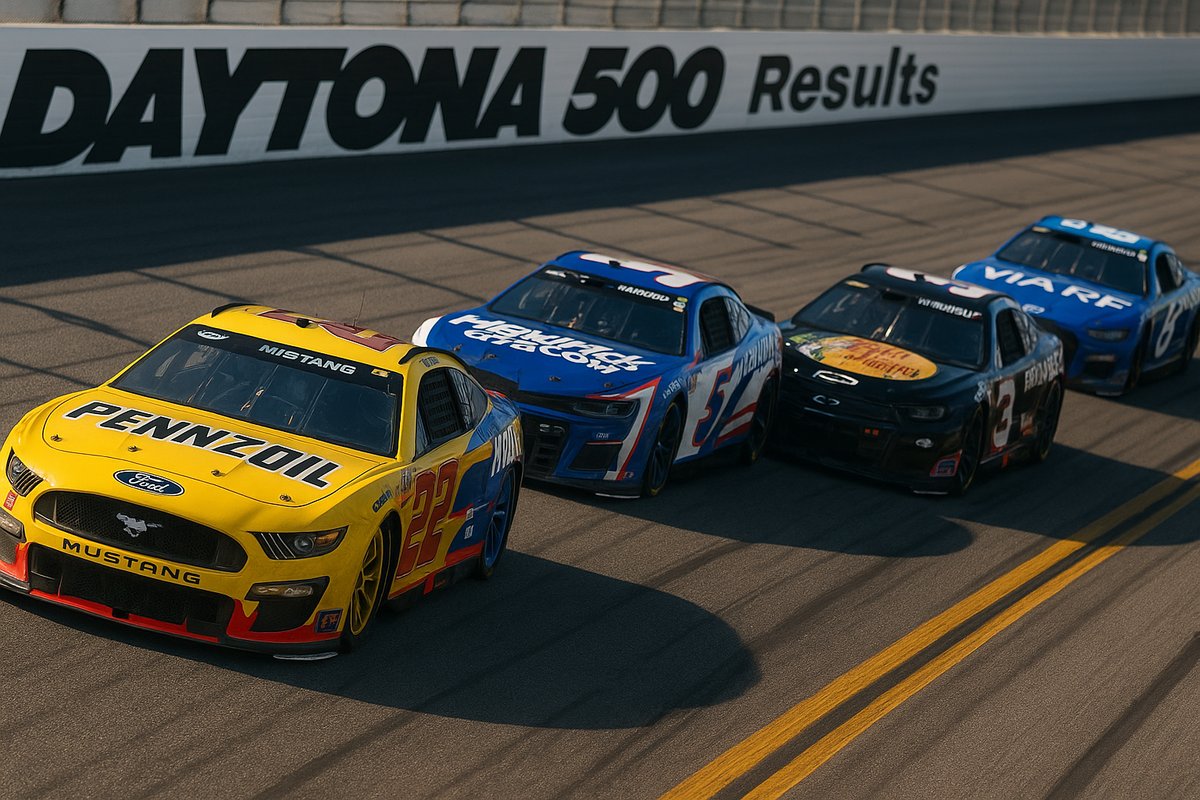
Growing up in Charlotte, NASCAR wasn’t a hobby — it was life, and every February when that green flag drops at Daytona, it still sends chills down my spine just like it did for my daddy and granddaddy before me. The 67th running of the Daytona 500 on Sunday, February 16, under those clear Florida skies lived up to every bit of the hype, with thousands packing the iconic speedway for the kind of high-speed drama that only this 2.5-mile tri-oval can deliver.
Chase Elliott in the No. 9 Chevrolet for Hendrick Motorsports took the checkered flag after a final-lap showdown that’ll be talked about for generations. He led 47 laps, especially owning those last segments, and his crew’s smart pit calls plus that fuel-mileage magic in the closing stages let him slice through the pack and win by a razor-thin 0.187 seconds over Denny Hamlin. My grandfather always said the margins at Daytona and Talladega separate the legends from the rest, and Elliott proved it again — his second Daytona 500 win after 2022, locking him straight into the Playoffs and that exclusive “500 Club” with a cool million-dollar bonus on top.
The race kicked off at 1:13 PM ET with perfect conditions, and right away drivers were swapping paint through the turns on that 200-lap grind. Twelve cautions kept things wild, including a big five-car wreck on lap 127 in Turn 2 that scattered debris and brought out the yellow for a long spell — classic superspeedway chaos like we’ve seen so many times at both Daytona and Talladega. Then on lap 185, Elliott’s boys nailed a flawless four-tire stop that gained him the track position he needed, and the final 15 laps turned into pure drafting warfare with near-misses and bold moves that only this place can serve up.
Elliott crossed first, followed by Hamlin in second, Kyle Larson third, Austin Cindric fourth, Brad Keselowski fifth, Chris Buescher sixth, Bubba Wallace seventh, Ryan Preece eighth, Tyler Reddick ninth, and Justin Haley tenth — every one of ’em running all 200 laps.
The purse hit a record $32.8 million, with Elliott banking $4.2 million, Hamlin $2.1 million, and Larson $1.6 million. Highest rookie got an extra $150,000 too. Looking back at the last decade of winners, Elliott now sits right there with folks like Joey Logano in ’24, Ricky Stenhouse Jr. in ’23, and of course Dale Earnhardt Jr. back in ’16 — names that mean something special when you’re raised trackside in Charlotte like I was.
Fuel strategy and drafting decided this one just like they always do at Daytona, where running tight in that draft can make or break you. Elliott’s crew got it right when it counted most, and that’s the kind of edge that turns a good day into history.
Elliott’s performance this year showcased the kind of consistency that separates championship contenders from occasional winners. Throughout the season-opening event, the No. 9 team demonstrated superior pit crew efficiency and real-time decision-making under pressure. That lap 185 pit stop wasn’t just about speed — it was about timing, fuel load calculations, and trusting that Elliott could manage his fuel consumption for those final laps. With an average fuel mileage of around 4.8 miles per gallon on the high-banked turns, every tenth of a second spent in the pits and every ounce of fuel carried made the difference between victory lane and second place.
The competition level at Daytona this year felt especially fierce. Denny Hamlin, driving the No. 11 Toyota for Joe Gibbs Racing, ran a smart race that kept him in contention throughout. Hamlin has become a master of superspeedway racing, with multiple Daytona 500 victories under his belt, and he nearly pulled off another upset in the closing laps. The battle between Elliott and Hamlin down the stretch highlighted why fans love this race — two world-class drivers, equally matched equipment, and pure racing instinct determining the outcome.
Kyle Larson’s third-place finish in the No. 5 Chevrolet for Hendrick Motorsports showed that the organization brought three strong cars to Daytona this year. Hendrick’s engineering advantage on superspeedway setups has been well-documented over the years, and this race was no exception. Having multiple cars running up front creates strategic opportunities that single-car teams simply can’t match when it comes to pit strategy and driver communication. Larson ran consistently fast throughout and managed to avoid the chaos that took out several other contenders.
The twelve cautions that punctuated the race kept everyone on their toes. Beyond the lap 127 wreck, there were several other incidents that bunched up the field and gave different drivers multiple opportunities to make their moves. This is what makes superspeedway racing so unpredictable — a driver can run a perfect race for 150 laps and still find themselves caught up in someone else’s mistake. Conversely, a driver running mid-pack can get fortunate with caution timing and suddenly find themselves in position to win.
Track position at Daytona cannot be overstated. The 2.5-mile layout features four distinct sections: the front stretch, the backmarkers’ territory going into Turn 1, the dogleg section where speeds peak above 200 mph, and the challenging Turn 4 complex that feeds back onto the front stretch. Drivers want to be on the inside line heading into the turns while maintaining enough momentum coming off them. Elliott’s crew understood this better than anyone on this particular Sunday, positioning him where he could make that final push when it mattered most.
The rookie class brought some fresh faces to Daytona, and while we won’t detail every single first-time 500 competitor, their presence added another layer to the competition. Daytona has always been a place where a rookie can surprise everyone with a strong run if they’re in the right equipment and get a little luck. Several young drivers showed promise but couldn’t quite crack the top ten, a reminder that experience at this level matters tremendously.
Weather played a perfect role in this year’s event. The clear skies meant consistent track conditions throughout the afternoon, allowing crews to make accurate fuel and tire calculations. Overcast conditions or threat of rain can completely change strategy, as teams have to account for temperature shifts and potential red-flag delays. Sunday’s sunshine and mild Florida breeze created an ideal environment for racing.
Looking ahead, Elliott’s victory establishes him as an early championship favorite heading into the season. The Daytona 500 has always carried outsized importance in the NASCAR Cup Series calendar — both for tradition and for the immediate playoff implications. By securing this win, Elliott punched his ticket to the playoffs and sends a clear message to the rest of the field that Hendrick Motorsports is firing on all cylinders heading into the regular season.
The legacy of Daytona 500 winners carries weight that transcends statistics. When you win this race, you join an exclusive club that includes names like Richard Petty, Dale Earnhardt, Bill Elliott, Jeff Gordon, and so many others who defined the sport. Chase Elliott has now made that leap twice, and barring injury or unforeseen circumstances, he’ll have many more opportunities to add to his total in the years ahead.