
The Evolution of NASCAR Safety Innovations
The push for safer racing in NASCAR has long been about more than protecting drivers—it’s a calculated business decision that shields sponsors from PR nightmares, stabilizes team valuations, and keeps the show running at tracks from Daytona to Texas Motor Speedway. From the pit lane perspective, every incremental safety upgrade also protects the multimillion-dollar partnerships that keep teams afloat.
In the sport’s early decades, stock car teams ran modified street machines with little more than mild-steel roll cages. Fatalities were an accepted risk, and sponsors had little leverage to demand better. What teams don’t tell fans is that those same basic cages were often the cheapest compliance option available, leaving legendary drivers like Richard Petty to absorb impacts that today’s engineering teams would consider unacceptable. Drivers wore leather helmets, simple cotton suits, and sat in seats with minimal padding—a stark contrast to today’s head-to-toe safety ecosystems.
High-profile tragedies in the 1960s and 1970s finally forced rule changes—window nets, better fuel cells, and early barrier experiments at places like Darlington. These moves were framed as safety reforms, yet they also reassured sponsors that their branding wouldn’t be tied to preventable disasters. Window nets alone prevented drivers from being ejected during rollovers, while improved fuel cell bladders dramatically reduced fire-related injuries after impacts. The adoption of better track drainage systems and safer guardrail designs also emerged during this era, though progress remained uneven across the circuit.
The 2001 Daytona 500 loss of Dale Earnhardt accelerated everything. Mandating the HANS device across the Cup Series wasn’t just compassionate; it was a strategic reset that let teams and sponsors market driver survival as a competitive advantage. The HANS (Head and Neck Support) device works by distributing crash forces across the shoulders and torso rather than concentrating them on the neck and head—a biomechanical breakthrough that has prevented countless serious injuries. SAFER barriers soon followed at superspeedways, cutting impact forces dramatically, while the 2007 Car of Tomorrow added side-impact reinforcements—though it forced crews to re-engineer setups and handling packages they’d spent years perfecting.
Modern barrier technology has evolved significantly since those early implementations. SAFER barriers, developed by Indy car racing in collaboration with NASCAR, absorb energy through a steel frame lined with foam material. When a car hits one at full speed, the barrier compresses gradually rather than creating the sudden deceleration that causes injury. Tracks have since invested in multiple generations of these systems, and data shows they’ve reduced peak impact forces from over 60 Gs in some crashes down to 20-30 Gs or lower—a difference that translates directly to survivability.
Beyond barriers, NASCAR has invested heavily in track infrastructure improvements. Expanded run-off areas at tight corners reduce the severity of wall contact, while catch fencing prevents debris from entering the grandstands and endangering spectators. The Safer Barrier installations now extend to road courses like Road America and the Roval, protecting drivers during the high-speed cornering that characterizes modern circuit racing. Teams and track operators work together constantly to identify accident-prone areas and retrofit them with upgraded safety systems.
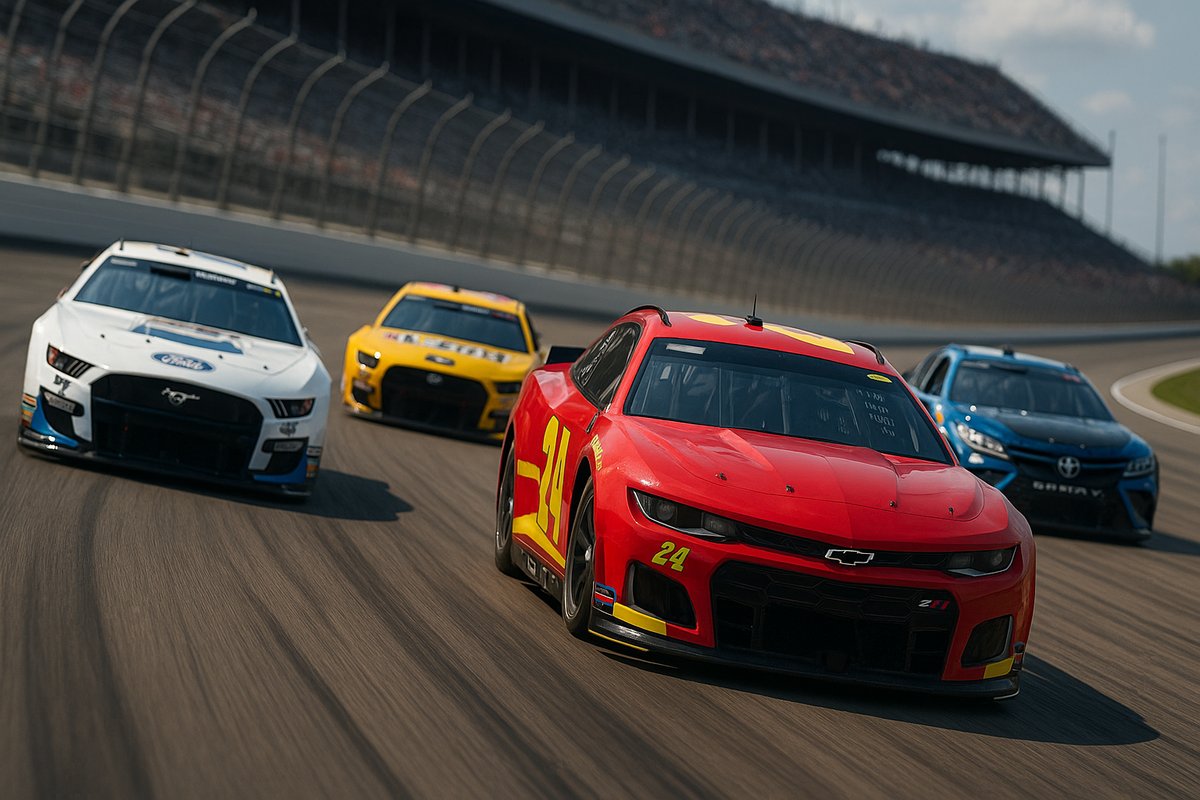
Today’s Next Gen car, rolled out in 2022, represents the latest intersection of safety and sponsorship strategy. Its carbon-fiber construction, symmetrical chassis, and advanced crumple zones pair with real-time telemetry that teams use to balance performance against long-term driver health. The design prioritizes controlled deformation—certain sections of the car are engineered to crumple in a predictable pattern that dissipates crash energy before it reaches the cockpit. Sponsors notice: a driver who stays healthy and marketable through an entire season protects the ROI on paint schemes and activation budgets.
The Next Gen platform also introduced improved visibility for drivers, with larger windows and adjusted sightlines that reduce blind spots during close racing. This seemingly small design choice has prevented numerous accidents by giving drivers better awareness of surrounding competitors. Additionally, the new cockpit design provides more space and better ergonomics, reducing fatigue during long races and lowering the risk of mistakes caused by driver discomfort.
Ongoing work on concussion protocols, aerodynamic aero tweaks to reduce lift, and faster emergency response vehicles continues that trend. Medical teams at every race now include neurologists who assess drivers for head injuries, and any driver who experiences a hard impact undergoes immediate evaluation before being cleared to continue. The sport’s Investment in aerodynamic research has specifically targeted unstable airflow that can lift cars during accidents, particularly at superspeedway speeds where separation from the track creates additional hazards. Partnerships with manufacturers have introduced composite materials that hold up under extreme loads, giving teams new ways to sell safety data to partners who want measurable risk reduction.
The evolution of driver suits deserves particular attention. Modern Nomex racing suits aren’t simply flame-resistant—they’re engineered systems with multiple layers designed to protect against different thermal hazards. The outermost layer repels flaming fuel, while inner layers provide insulation. Modern suits also incorporate cooling systems that help drivers maintain body temperature during multi-hour races, reducing heat stress that could affect decision-making and reaction times. Some teams have adopted undergarments with integrated cooling channels, adding another layer of protection.
Helmet technology has advanced dramatically as well. Current NASCAR-approved helmets incorporate advanced foam liners that absorb impact energy more effectively than older designs, and they’ve become lighter while maintaining or improving protection levels. Helmet manufacturers work closely with medical researchers to understand concussion mechanics, leading to designs that reduce rotational forces—a key factor in traumatic brain injury. Visor and shield options also provide better protection from debris while maintaining driver visibility.
On-track medical response represents another critical evolution. Most NASCAR events now feature multiple safety vehicles positioned strategically around the track, staffed with trauma surgeons and experienced rescue personnel. Helicopter ambulances are on standby at major races, capable of transporting critically injured drivers to Level 1 trauma centers within minutes. This rapid response infrastructure has saved lives in situations that would have been fatal just decades ago.
Key facts underscore the business case:
– Zero basilar skull fracture fatalities in the Cup Series since the 2001 HANS mandate.
– SAFER barriers cut average impact forces by up to 80 percent where installed.
– The Next Gen platform added more than 100 safety features, including a fuel cell that passed over 50 simulated crash tests.
– Modern Nomex suits withstand direct flame for more than 30 seconds.
– Concussion rates dropped 40 percent after 2015 helmet upgrades.
– Over 90 percent of tracks now use SAFER barriers or equivalents, covering more than 15 miles of wall.
– Emergency response times to serious incidents have improved from an average of 8 minutes in the 1990s to under 2 minutes today.
– Carbon-fiber composite materials in Next Gen cars reduce overall vehicle weight while increasing structural rigidity.
From the pit lane, these numbers translate directly into sponsor retention and team stability. Safer racing keeps the product—and the partnerships—intact for the long haul. Teams can now confidently market driver health as part of their brand narrative, and sponsors increasingly view safety investments as evidence of organizational maturity and forward-thinking culture.
The future of NASCAR safety continues to evolve. Discussions about further aerodynamic modifications, additional cockpit enhancements, and improved barrier materials remain ongoing. Some teams are exploring how real-time biometric monitoring could provide additional health data during races, though privacy and competitive fairness concerns remain. What’s certain is that the sport’s commitment to driver safety has transformed from a box to check into a core competitive differentiator—one that benefits drivers, sponsors, teams, and fans alike.