
Kyle Larson Career Stats
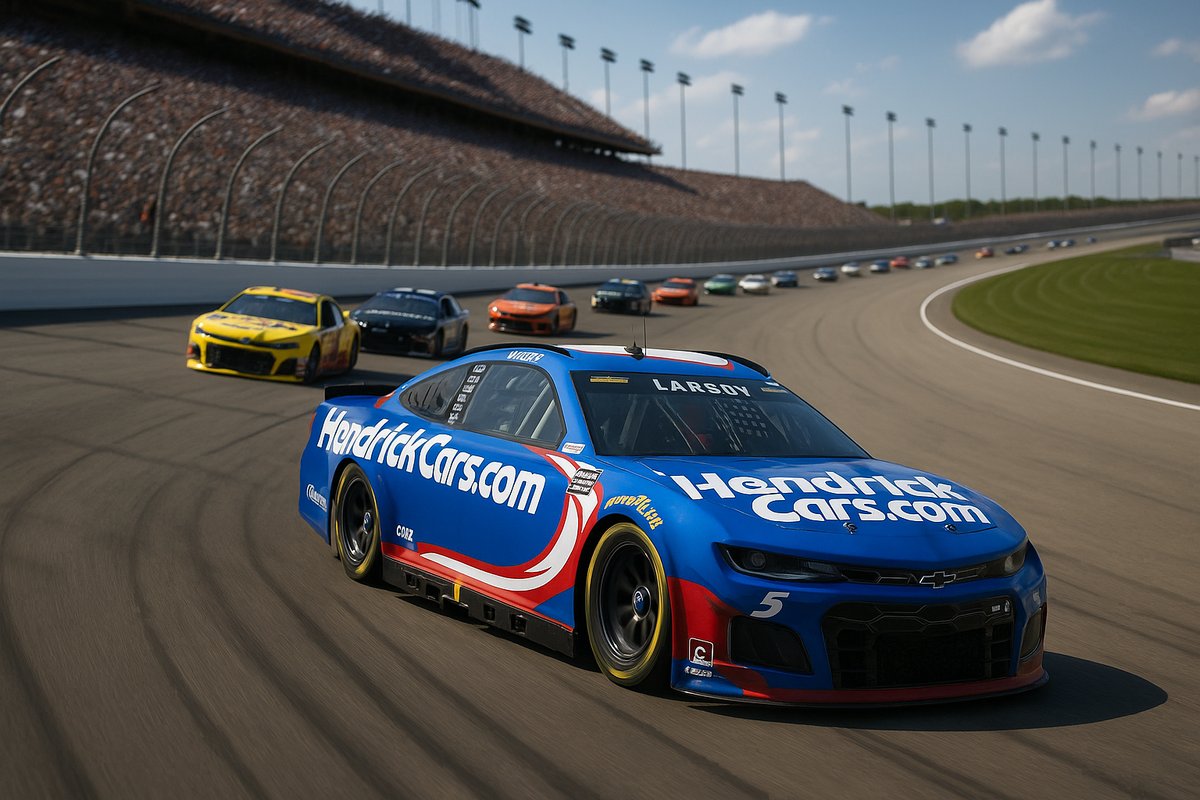
Kyle Larson’s ongoing partnership with Hendrick Motorsports in the No. 5 entry continues to deliver measurable returns for both the driver and the organization. Since assuming the seat in 2021, Larson has compiled a championship and a steady stream of victories that strengthen the team’s positioning in the increasingly sponsor-driven Cup Series landscape.
From the pit lane perspective, the 2021 title run represented more than personal redemption after his earlier suspension; it validated Rick Hendrick’s strategic decision to place Larson in one of the sport’s most historically significant numbers. That season’s versatility across short tracks, road courses, and superspeedways translated directly into sponsor value, a dynamic teams rarely highlight when discussing raw performance numbers.
Larson’s win totals since joining Hendrick reflect consistent execution under the organization’s resources:
– 2021: 4 wins, 3 poles, 17 top fives, 23 top tens
– 2022: 5 wins, 4 poles, 15 top fives, 21 top tens
– 2023: 2 wins, 2 poles, 12 top fives, 18 top tens
– 2024: 3 wins, 2 poles, 14 top fives, 20 top tens
– 2025 (to date): 2 wins, 1 pole, 6 top fives, 9 top tens
Those 16 victories and 12 poles through the current season underscore how Hendrick’s engineering and Larson’s adaptability combine to protect sponsor exposure across an expanded calendar.
What teams don’t tell fans is that top-five and top-ten percentages matter as much to partners as outright wins. Larson’s 64 top fives and 91 top tens since 2021 provide the kind of reliable television time that keeps major backers aligned with the No. 5 program.
Daytona 500 results further illustrate the business calculus at superspeedways. While Larson has yet to win the event, multiple top-10 finishes demonstrate the draft-management skills required to keep the car—and its sponsors—in contention on a track where attrition can erase months of preparation.
The No. 5’s lineage adds intangible equity that Hendrick leverages in negotiations. Placing a championship-caliber driver in a number previously carried by Mark Martin, Terry Labonte, and Dale Earnhardt Jr. creates narrative value that resonates with both legacy fans and new corporate partners.
Larson’s estimated net worth of $20–25 million reflects the intersection of prize money, performance incentives, and diversified sponsorship agreements. His multi-discipline schedule, including IndyCar and dirt events, expands his marketability beyond the Cup garage and provides additional revenue streams that teams increasingly encourage for their top talent.
Career Foundation and Early Success
Before his arrival at Hendrick Motorsports, Larson built substantial credentials across multiple racing disciplines. His stock car racing education began in earnest with Chip Ganassi Racing, where he demonstrated the kind of raw speed and fearlessness that eventually attracted elite team attention. Those formative Cup Series seasons established a track record of competitiveness even in competitive environments, laying groundwork for the championship caliber he’d display once equipped with Hendrick’s organizational infrastructure.
His ability to transition seamlessly between different racing formats—from short-track sprint cars to road course mastery—reveals a fundamental understanding of vehicle dynamics that translates across platform changes. This versatility became increasingly valuable as NASCAR’s schedule expanded road course content and evolved technical regulations. Larson’s willingness to race dirt events during off-weekends also maintains the racecraft sharpness that distinguishes top-tier drivers from merely competent competitors.
Championship Season Deep Dive
The 2021 NASCAR Cup Series championship represents the definitive validation of Larson’s elite status. That season required excellence across virtually every track type and condition. His four victories came at strategically important venues: Las Vegas Motor Speedway, Sonoma Raceway, Kansas Speedway, and the Charlotte Motor Speedway Road Course. Each represented different technical challenges, yet Larson conquered them with similar precision.
The poles—three qualifying efforts that resulted in front-row starts—further demonstrated command of the single-lap performance metrics that separate good drivers from champions. In modern NASCAR, starting position correlates directly with fuel strategy flexibility and tire management options. Those front-row starts gave crew chief Cliff Daniels and the No. 5 team invaluable strategic latitude throughout races.
What made 2021 particularly impressive was consistency through the playoffs. Larson advanced through each playoff round despite facing legitimate championship contenders. His ability to deliver when championship points were distributed differently—when one race could eliminate entire storylines—proved his mental fortitude alongside raw speed. That championship earned Larson permanent status among NASCAR’s elite tier, a distinction that carries weight in sponsor negotiations and team autonomy discussions for seasons to come.
Superspeedway Performance and Plate-Track Expertise
Larson’s superspeedway results merit specific attention given the outsized importance these events hold in NASCAR’s cultural and commercial landscape. Restrictor plate racing demands a different skill set than road course or short-track competition—drivers must manage cooperative drafting relationships while maintaining individual competitive identity. At Talladega Superspeedway and Daytona International Speedway, Larson has consistently positioned himself in contention despite the seemingly random nature that defines plate racing.
His recent superspeedway results show maturation in how he approaches these high-attrition events. Rather than forcing aggressive moves that historically led to wrecks, Larson now demonstrates patience-based racecraft that keeps him in position when attrition naturally elevates competitive standing. This represents subtle but consequential improvement in risk management—the ability to win without overextending and losing catastrophically.
The Daytona 500 specifically remains on Larson’s unfinished business list, but his multiple top-10 finishes in the Great American Race indicate capability rather than cosmic bad fortune. Eventually, the combination of his speed, Hendrick’s equipment, and Daniels’ strategic acumen will likely deliver that signature victory.
Road Course Dominance and Modern Track Evolution
Road course racing has become increasingly central to NASCAR’s Cup Series identity. Larson’s background with Ganassi included substantial road course development, and he’s continued leveraging this expertise at Hendrick. His road course wins and top-five finishes since 2021 represent some of his most convincing performances, suggesting that as NASCAR continues adding road course events, Larson’s competitive window may actually expand rather than contract.
Road courses reward precision braking, downshift execution, and the kind of smooth steering inputs that separate elite drivers from the field. These technical demands favor drivers with diverse racing backgrounds—exactly Larson’s profile. As younger drivers enter the Cup Series with increasingly road-course-focused development trajectories, Larson’s established mastery of these venues represents a durable competitive advantage that transcends equipment quality.
Heading into the remainder of 2025, the combination of Larson’s proven playoff experience and Hendrick’s organizational depth positions the No. 5 entry as a sustained contender. From a business standpoint, that consistency protects sponsor activation windows and keeps the team relevant in an era where television ratings and digital engagement directly influence next season’s budget allocations.