
Brad Keselowski’\”s Epic NASCAR Racing Career: A Story of Speed and Determination
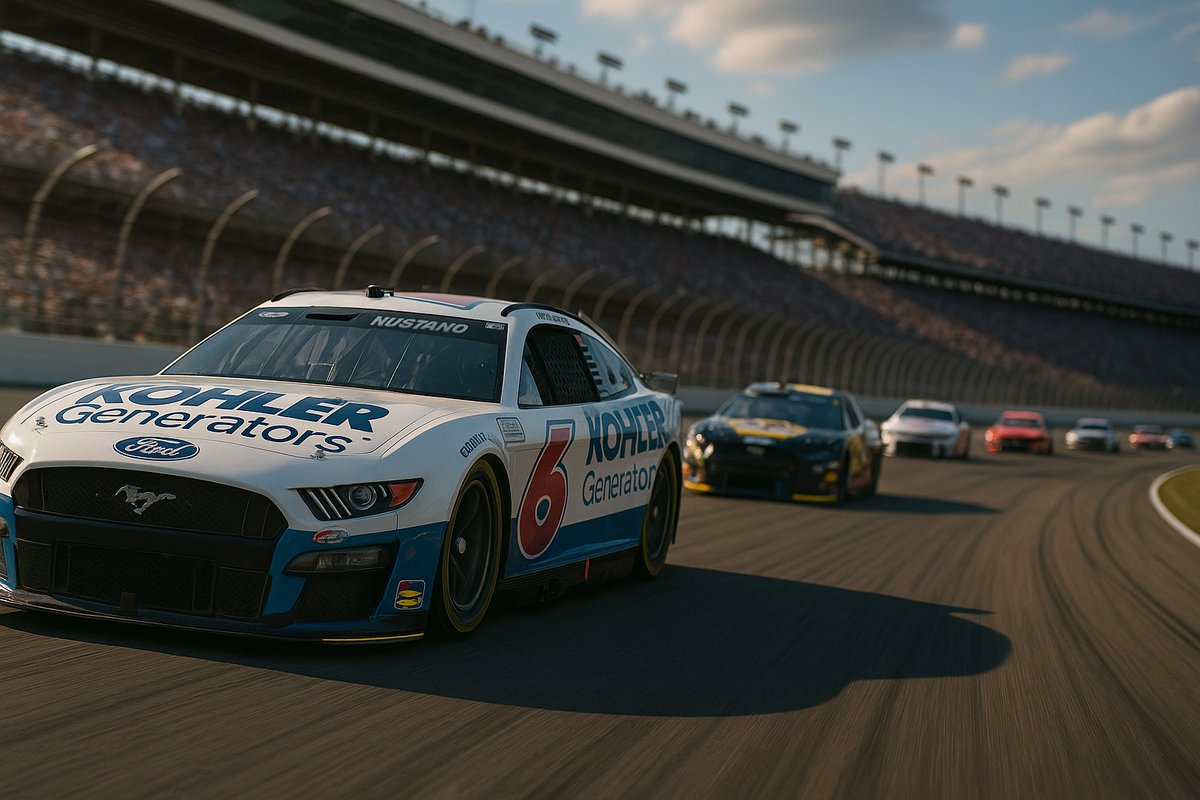
Brad Keselowski’s path through NASCAR reflects the calculated blend of driving talent, team resources, and commercial positioning that separates sustained success from one-off wins. From grassroots tracks to a Cup Series championship with Team Penske, his career has consistently aligned aggressive strategy with the demands of sponsors and series economics.
From the pit lane perspective, those early local battles did more than build reflexes. They honed the short-track decision-making that later translated into restart execution and traffic management at the Cup level. What teams don’t tell fans is how quickly mechanical lessons from those years become line-item budget decisions once a driver reaches national series competition.
His progression through the Xfinity and Truck Series was marked by rapid win accumulation and the kind of adaptability that caught the attention of top-tier organizations. Those results weren’t simply trophies; they demonstrated an ability to communicate setup needs to crew chiefs and adjust to variable conditions—skills that directly influence sponsor ROI through consistent television exposure and finish-position marketing.
Born in 1984 in Rochester Hills, Michigan, Keselowski’s early racing foundation was rooted in the Midwest’s robust short-track racing culture. His family’s involvement in motorsports provided both exposure and resources that accelerated his climb through competitive ranks. By his teenage years, he was already competing at regional levels, where his aggressive but calculated driving style began earning recognition among team owners and scouts monitoring developmental talent pipelines.
The transition to NASCAR’s national series came in the late 2000s when Keselowski began competing in the Craftsman Truck Series, a critical training ground for understanding NASCAR’s unique dynamics. Unlike open-wheel racing or road courses, truck series competition taught him the importance of tire management, fuel strategy, and understanding how equipment degradation across a race distance demands tactical adjustments. His 2009 season in the Truck Series yielded multiple victories and demonstrated the consistency that separates journeymen drivers from championship-caliber talent.
Keselowski’s Xfinity Series tenure further refined his abilities. Competing for multiple organizations between 2009 and 2012, he accumulated over 50 wins and became known for strong performances in back-to-back race weekends and endurance events. The Xfinity Series demands precision in equipment setup communication because teams operate with tighter budgets than Cup teams; a driver’s ability to maximize limited resources becomes paramount. Keselowski’s success in this environment proved he could extract maximum performance from varying mechanical platforms.
The move to Penske marked the clearest business inflection point. The organization’s engineering infrastructure paired with Keselowski’s willingness to push equipment produced immediate returns in the form of victories and, eventually, a championship. That title run underscored how playoff format incentives reward reliability as much as outright speed, turning season-long consistency into both points and renewed sponsor leverage.
His 2012 championship season remains a masterclass in modern NASCAR strategy. Keselowski accumulated 26 top-10 finishes across 36 races, demonstrating remarkable consistency while also recording five wins during the regular season. What distinguished his championship run was strategic aggressiveness during the Chase for the Sprint Cup—the ten-race playoff format that determines the champion. Rather than adopting a purely defensive approach, Keselowski continued taking calculated risks that resulted in playoff victories at Richmond and Phoenix, moves that secured his position in the finale at Homestead.
Signature performances at Talladega and Michigan further illustrated his value in high-visibility events that drive broadcast ratings and hospitality packages. Those moments reinforced rivalries that keep fan engagement metrics elevated, a factor teams and manufacturers monitor closely when allocating marketing dollars. Keselowski’s aggressive style at Talladega’s superspeedway produced memorable moments—both victories and controversial finishes—that generate significant social media engagement and water-cooler discussions that extend beyond the racing community.
Michigan holds particular significance in Keselowski’s career narrative. Racing at the 2-mile D-shaped oval just miles from his hometown, he consistently performed at elite levels, securing multiple victories and top finishes. These performances resonated with local sponsors and regional fan bases, demonstrating how geographic proximity and driver authenticity can amplify marketing value. Teams recognized that Keselowski’s Michigan success translated into increased merchandise sales and sponsor activation opportunities in key demographic markets.
Beyond the statistics, Keselowski’s tenure has shown how a driver’s on-track persona can extend the commercial reach of an entire organization. His leadership within the Penske stable helped shape younger talent development pipelines, an internal strategy that reduces long-term driver-acquisition costs while maintaining competitive depth. The legacy continues to influence how organizations balance raw speed with the business realities of sponsorship retention and series positioning.
Keselowski’s competitive approach—characterized by willingness to engage in wheel-to-wheel battles and occasionally contentious on-track moments—created a polarizing but commercially valuable public persona. Some fans embraced his aggressive style as authentically competitive, while critics viewed certain incidents as reckless. However, from a marketing perspective, this duality served team interests; polarizing figures generate higher engagement metrics than universally popular but unremarkable competitors. NASCAR teams understand that passionate disagreement still translates into television viewership and social media activity.
His transition to RFK Racing (formerly Roush Fenway Racing) as both driver and co-owner marked a significant evolution in his career trajectory. Moving into an ownership role demonstrated his progression from executing competitive strategies to shaping organizational direction. This transition reflects how successful Cup Series drivers leverage accumulated knowledge and industry relationships into equity positions that provide long-term wealth creation beyond driver salaries alone.
Keselowski’s influence extended into NASCAR’s governance discussions. As a veteran driver with championship experience and team ownership stakes, his voice in driver council meetings and NASCAR policy discussions carried weight proportional to his on-track accomplishments. This institutional influence—often invisible to casual fans—shapes rule changes, safety protocols, and competitive frameworks that directly impact driver careers and team operations.
The analytical aspect of his driving cannot be overlooked. Modern NASCAR success demands deep understanding of aerodynamic setups, tire degradation modeling, and fuel-mileage calculations. Keselowski’s technical collaboration with crew chiefs across multiple organizations demonstrated sophisticated grasp of these elements. His ability to articulate mechanical feedback in terms crew chiefs could translate into setup adjustments proved as valuable as pure speed, particularly during critical playoff moments where qualifying and early-race positioning determine ultimate outcomes.
Looking at career longevity and consistency, Keselowski’s sustained performance across nearly two decades reveals something beyond momentary success. His ability to maintain competitive relevance through technological evolution—from naturally aspirated engines to turbo-hybrid powerplants, from traditional setups to extensive aerodynamic modifications—speaks to adaptive intelligence and willingness to continuously learn. Younger drivers often struggle with major technical transitions, but Keselowski consistently demonstrated mastery across platform changes.