
Christopher Bell Ignites the Track with Joe Gibbs Racing
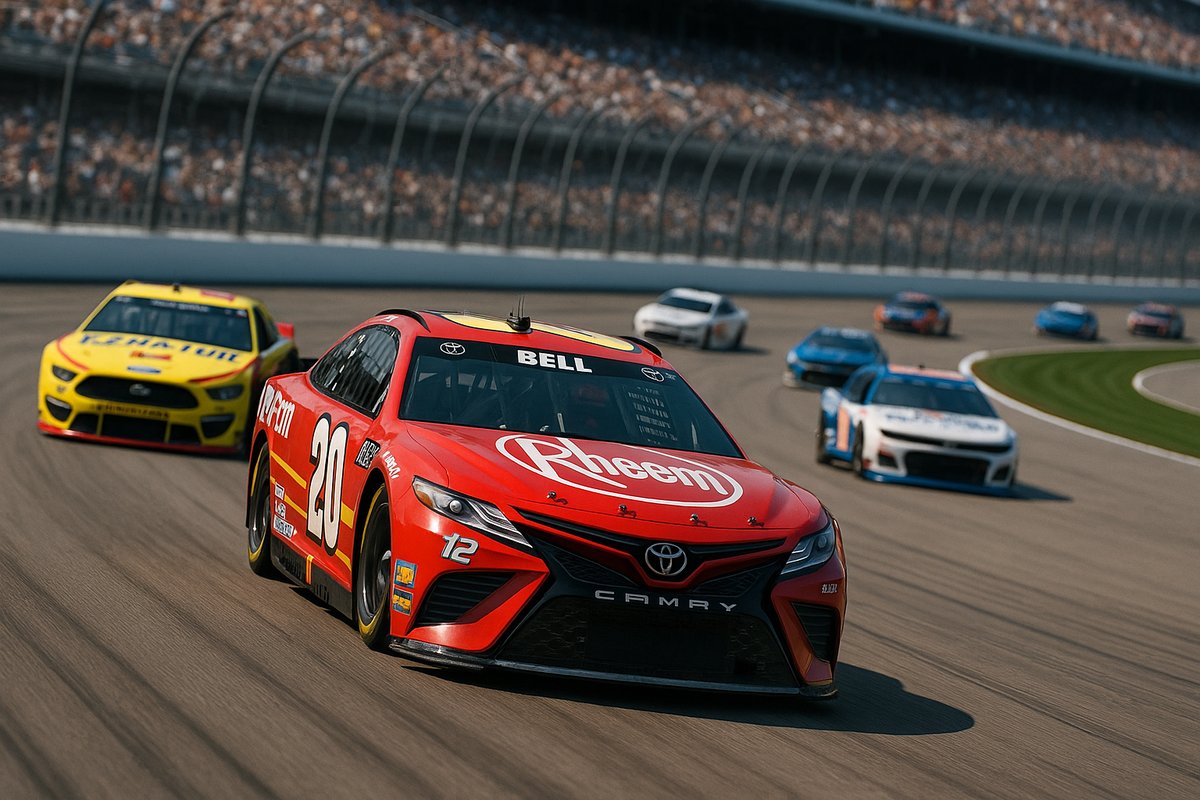
Christopher Bell’s arrival at Joe Gibbs Racing has reshaped the team’s competitive outlook, blending raw speed with calculated business positioning that keeps sponsors engaged across multiple platforms. The organization’s multi-car structure allows for shared data and resources that smaller outfits simply cannot match, giving Bell’s No. 20 team an edge in both qualifying runs and long-run strategy sessions.
From the pit lane perspective, what teams don’t tell fans is how closely driver performance is tied to sponsor deliverables—activation events, social content, and hospitality access all factor into contract renewals that fund the next chassis or engine program. Bell has delivered on-track results that translate directly into those metrics, strengthening JGR’s leverage when negotiating with partners who want consistent visibility in a crowded NASCAR marketplace.
Team strategy has centered on optimizing tire management and pit-road execution, areas where JGR’s engineering depth pays dividends over a full race distance. This approach not only protects the points position but also safeguards the financial investment from primary sponsors who expect their branding to remain prominent through clean finishes and podium appearances.
What stands out in the garage is how Bell’s integration has reinforced JGR’s reputation as a destination for drivers who understand the commercial side of the sport. The results speak for themselves in the standings, yet the real story lies in the sustained partnerships that keep the operation funded at the highest level.
Bell’s journey to Joe Gibbs Racing represents a natural progression for a driver who cut his teeth in competitive environments. His experience across multiple racing series—from the ARCA Menards Series to the NASCAR Craftsman Truck Series and Xfinity Series—provided him with a diverse skill set that translates across different vehicle setups and competitive dynamics. This background proved invaluable when transitioning to the Cup Series, where setup sensitivity and nuanced feedback separate consistent front-runners from the middle of the pack. The institutional knowledge Bell brings to JGR’s engineering department accelerates the learning curve for both driver and team, creating a feedback loop that improves performance week after week.
One often-overlooked aspect of Bell’s fit with JGR is the alignment of driving philosophy with the organization’s technical approach. Joe Gibbs Racing has built its reputation on meticulous attention to detail—from chassis setup to aerodynamic tuning to fuel strategy mapping. Bell’s methodical approach to race weekends, where he personally reviews data analysis and contributes to setup decisions rather than simply piloting the car, maximizes this synergy. Drivers who engage actively in the engineering process tend to achieve faster adaptation cycles, which directly impacts qualifying speed and race-day execution. This collaborative mindset has become increasingly important in modern NASCAR, where technological sophistication requires driver-engineer partnerships rather than one-way communication.
The competitive landscape of the Cup Series has become increasingly consolidated among a handful of well-funded teams, and Joe Gibbs Racing remains at the forefront of this consolidation. With multiple cars competing for wins, points, and playoff positioning, JGR’s internal competition drives quality improvement across the organization. When Bell goes up against his teammates in practice sessions and qualifiers, the competitive fire pushes everyone to extract maximum performance from their equipment. This internal benchmark system proves more effective than external competition alone because drivers and engineers make direct comparisons using identical or near-identical equipment, isolating driver performance variables with precision.
From a technical standpoint, JGR’s investment in simulation technology and data analytics provides Bell with preparation advantages that were unavailable to previous generations of drivers. Before arriving at the track, drivers can now experience hundreds of virtual laps on each venue, testing setups, studying traffic patterns, and practicing pit-road sequences. This preparation translates to faster seat time utilization during actual practice sessions, allowing teams to focus on nuanced adjustments rather than baseline exploration. Bell’s willingness to embrace these technological tools—some drivers resist simulator work, viewing it as less relevant than actual track time—positions him to maximize the return on JGR’s substantial technology investments.
Pit-road performance deserves particular emphasis when discussing Bell’s success at JGR. Crew chiefs and pit crews at Joe Gibbs Racing undergo continuous training to maintain their competitive edge in what has become one of NASCAR’s most critical performance differentials. Four-tire pit stops lasting under twelve seconds can be the difference between winning and finishing eighth in competitive races. Bell’s pit crew, led by experienced veterans who understand JGR’s culture and procedures, has demonstrated remarkable consistency. The synchronization between driver execution and pit crew precision reaches its highest level when both parties trust each other completely—a trust that builds through repetition and communication. Bell’s respectful demeanor toward his support team has earned genuine respect in return, creating positive team dynamics that manifest as improved on-track results.
Weather considerations and track-specific strategies also benefit from JGR’s multi-car program. When multiple cars run similar setups at the same venue, engineers can compare how different drivers interpret similar conditions, how cars behave in traffic, and how tire wear patterns develop across a full race distance. This comparative analysis generates insights that single-car teams struggle to achieve. For instance, if Bell’s car experiences understeer in Turn 3 while a teammate’s setup produces oversteer in the same corner, engineers can identify the setup variable responsible and adjust accordingly. This collaborative data gathering accelerates setup optimization and reduces the time spent chasing performance through trial and error.
Looking forward, Bell’s tenure at Joe Gibbs Racing will likely extend well into the future, assuming sustained on-track success and mutual satisfaction with the partnership. Drivers who establish themselves as integral parts of competitive organizations often enjoy extended tenures because team ownership recognizes the cumulative value of continuity. New drivers require onboarding periods where institutional knowledge transfers occur; replacing a performer like Bell would necessitate repeating that cycle. From a business perspective, retaining proven talent makes more financial sense than constant driver carousel changes. Bell understands this dynamic and seems committed to building something lasting at JGR rather than pursuing short-term opportunities elsewhere.
The broader NASCAR community benefits from Bell’s success as well. When young drivers see a peer reaching the highest levels of the sport and thriving in a premiere organization, it reinforces the pathways that produce consistent winners. Bell’s example demonstrates that methodical progression through the NASCAR ranks, combined with adaptability and professionalism, creates sustainable success. This contrasts with boom-and-bust narratives where drivers experience brief success followed by struggles, sending concerning signals about the sport’s accessibility to developing talent.