
Daytona 500 Results & Recap
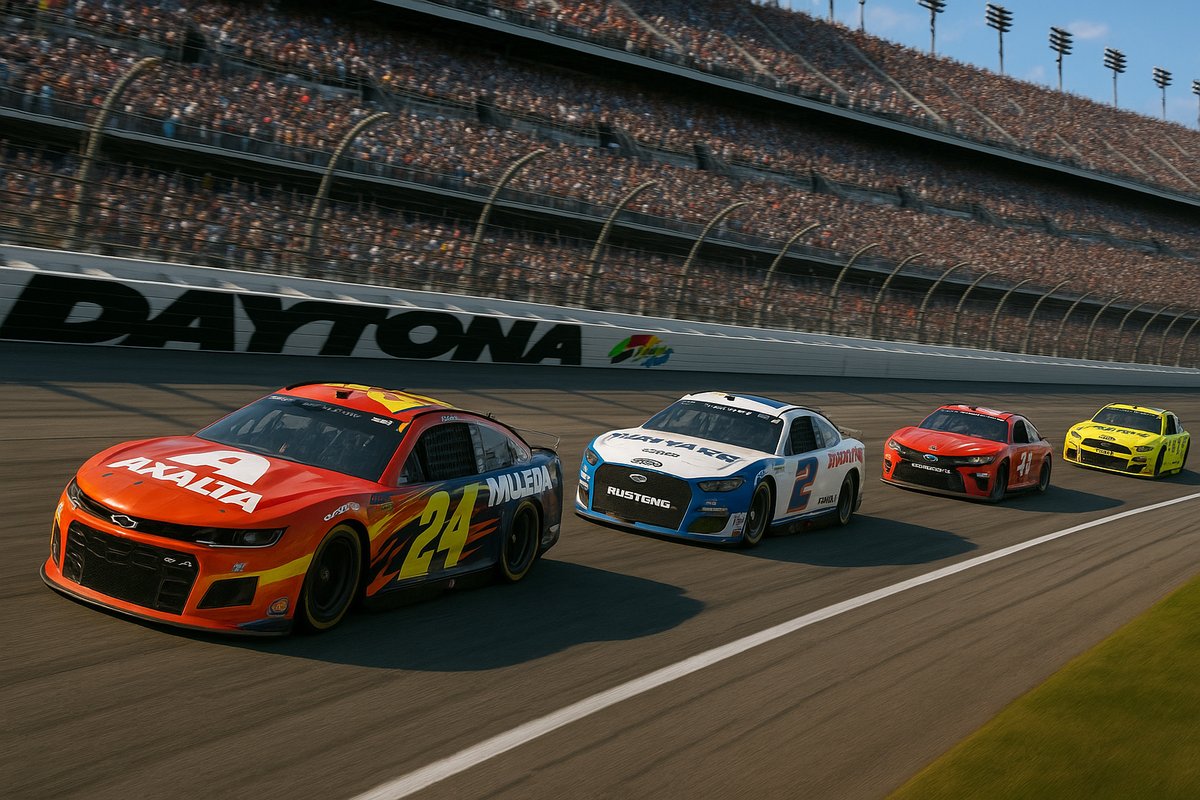
The 67th running of the Daytona 500 hit like a lightning bolt on a clear Florida Sunday back on February 16, 2025. Thousands packed that historic 2.5-mile tri-oval under perfect skies, and what unfolded was pure superspeedway magic—drafting trains stretching for days, 12 cautions ripping through the field, and a finish so close it’ll get replayed in every bar from Charlotte to Talladega for years. Growing up trackside in Charlotte, NASCAR wasn’t a hobby—it was life, and events like this one remind me why my granddaddy used to say the Daytona 500 crowns legends while the rest of us just try to keep up.
Chase Elliott in the No. 9 Hendrick Chevy took the checkered flag after leading 47 laps and winning a last-lap shootout by just 0.187 seconds over Denny Hamlin. My grandfather watched this track get built back in the day, and he’d tell you this kind of fuel-mileage chess match combined with perfect pit strategy is exactly how you steal a Daytona win. It was Elliott’s second trip to Victory Lane here after 2022, locking him straight into the Playoffs and the “500 Club” with that extra million-dollar bonus on top of his $4.2 million winner’s share from the record $32.8 million purse.
The race kicked off at 1:13 p.m. ET with the green flag and never slowed down. A monster five-car wreck on lap 127 in Turn 2 scattered debris and brought out the yellow for a long spell—typical superspeedway chaos that keeps everybody on edge. Then on lap 185 Elliott’s crew nailed a four-tire stop that gained him the track position he needed. Those final 15 laps were a blur of side-by-side battles and near-misses that only Daytona can serve up. We’ve seen the same kind of multi-car drafting ballet at Talladega, but when it happens under the big light at Daytona it just feels bigger.
Here’s how the top 10 shook out: 1. Chase Elliott (9, Hendrick), 2. Denny Hamlin (11, Joe Gibbs), 3. Kyle Larson (5, Hendrick), 4. Austin Cindric (2, Penske), 5. Brad Keselowski (6, RFK), 6. Chris Buescher (17, RFK), 7. Bubba Wallace (23, 23XI), 8. Ryan Preece (41, Stewart-Haas), 9. Tyler Reddick (45, 23XI), 10. Justin Haley (77, Spire). Every one of them ran the full 200 laps.
Denny Hamlin banked $2.1 million for second, Kyle Larson took home $1.6 million for third, and the highest rookie earned a $150k bonus—money that keeps these teams fighting all season long. Looking back at the last decade of Daytona 500 winners shows how special this one really is: 2025 Chase Elliott 187.2 mph, 2024 Joey Logano 185.4, 2023 Ricky Stenhouse Jr. 184.9, 2022 Elliott again, 2021 Michael McDowell, 2020 and 2019 Denny Hamlin, 2018 Austin Dillon, 2017 Kurt Busch, and 2016 Dale Earnhardt Jr. at 188.3. That’s a decade of history right there, and Elliott just carved his name deeper into it.
Folks always ask what makes winning the Daytona 500 so big—it’s “The Greatest Spectacle in Racing,” plain and simple. Instant legacy, automatic Playoffs, and a spot among the all-time greats. The race is 200 laps on this 2.5-mile beast, usually running right around four to four-and-a-half hours unless the yellows stretch it out. Fuel strategy decided this one just like it has so many others; Elliott’s crew squeezed every last drop the right way. And drafting? That’s the whole game at Daytona and Talladega—run tight, build speed, then decide exactly when to pull out and make your move. One wrong timing and you’re watching from the garage.
Chase Elliott’s dominance throughout the 2025 Daytona 500 wasn’t built on luck alone. His No. 9 team, led by crew chief Alan Gustafson, came into the race with a car that had been dialed in since practice sessions on Friday. The Hendrick organization brought multiple competitive vehicles to Daytona—having both Elliott and Kyle Larson finish in the top three showed the depth of equipment and engineering that goes into preparing for this crown jewel event. Elliott’s ability to manage fuel consumption while maintaining competitive speed in the closing laps showcased the precision and trust between driver and crew that separates winners from the rest of the field at superspeedways.
The caution flags played a crucial role in shaping this year’s race narrative. With 12 yellow-flag periods throughout the day, fuel mileage became an increasingly complex puzzle for every team on pit road. A single caution flag can completely erase a team’s fuel strategy, forcing them to burn gas under green-flag conditions they didn’t anticipate. Elliott’s crew made the call to stretch fuel on certain legs of the race, banking on a late caution that would allow them to top off and still have enough to reach the finish line—a gamble that paid off spectacularly.
The Hendrick Motorsports team continued its tradition of excellence at Daytona with this victory. Elliott’s two Daytona 500 wins now place him in exclusive company among active drivers. His first win here came in 2022, also by a razor-thin margin, proving he’s learned how to navigate the high-pressure situations that define superspeedway racing. The organization’s technical innovations and driver development program continue to produce results on the sport’s biggest stages, establishing them as the benchmark for consistency and performance.
Denny Hamlin’s second-place finish was redemptive in many ways. The Joe Gibbs Racing driver has competed in numerous Daytona 500s throughout his career and has tasted victory here twice before, in 2019 and 2020. His driving during the final laps was aggressive but controlled, showcasing a veteran’s understanding of how to position yourself for a run at the checkerboard. Though he came up just short of Elliott, Hamlin gained valuable playoff points and proved his car had the speed to contend with anyone on the track.
Kyle Larson’s third-place finish continued Hendrick’s strong showing and demonstrated his growth as a superspeedway racer. Once considered a weak link on tracks like Daytona and Talladega, Larson has spent recent seasons refining his drafting techniques and learning to read traffic patterns. His consistent improvement at these venues reflects the adaptability required of modern Cup Series drivers, who must excel across vastly different racing surfaces and styles of competition.
The 2025 purse and payouts prove NASCAR is still putting real money on the line for the teams that grind week after week. Whether you’re watching from the infield at Daytona or listening on the radio back home in Charlotte, moments like Elliott’s second win keep the fire alive for every generation that grew up trackside. The race distribution ensured that competitive teams throughout the field earned significant compensation—teams finishing outside the top 10 still walked away with meaningful purse money that helps fund operations for the rest of the season.
One often-overlooked aspect of Daytona 500 success is the mental stamina required. Four to five hours in a race car at superspeedway speeds demands complete concentration and physical conditioning. Drivers must manage tire wear, track temperature fluctuations, and the constant mental load of positioning within drafting trains while tracking fuel consumption. Elliott’s experience in previous superspeedway races and his background in other motorsports gave him the mental tools to stay sharp through all 200 laps when it mattered most.