
Inside Kyle Larson’s Path to NASCAR Stardom
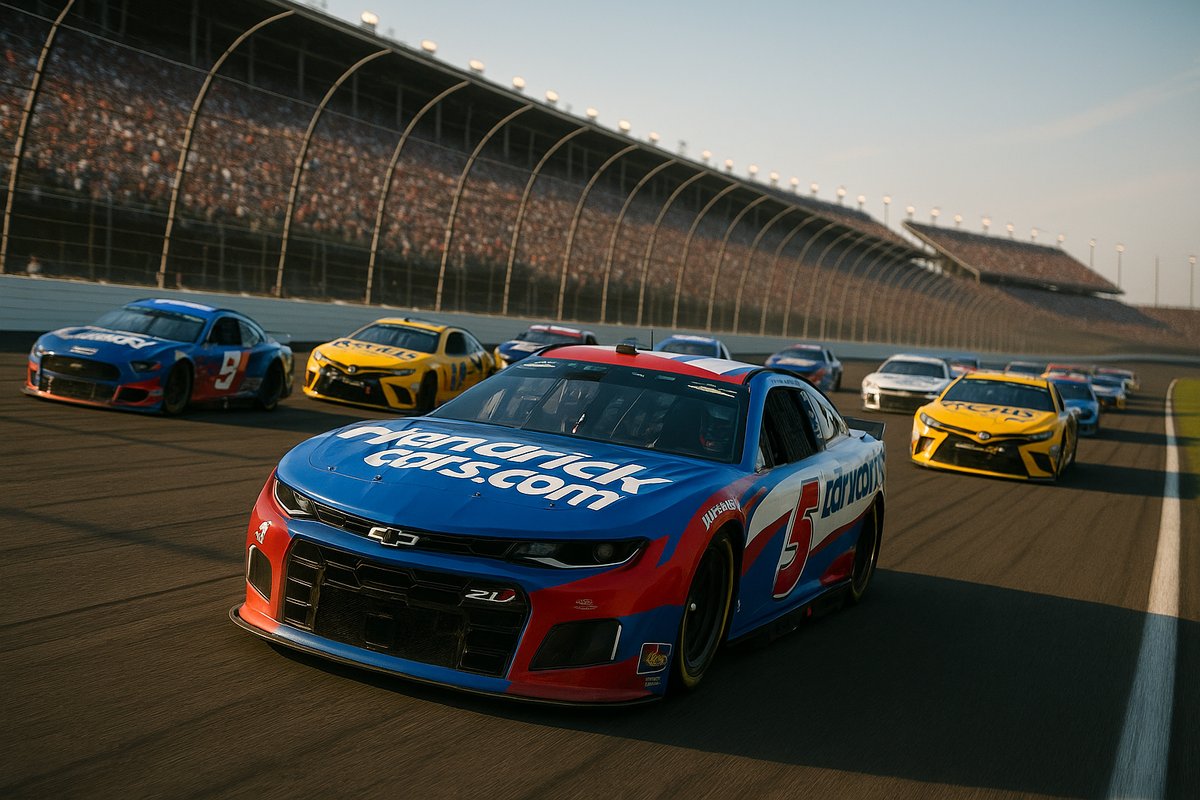
Kyle Larson’s rise through the ranks of stock car racing underscores the value of calculated career moves in an industry where driver contracts, sponsor alignments, and team resources often dictate long-term success. From his California dirt-track foundation to securing a multi-year extension with Hendrick Motorsports, Larson has demonstrated how versatility across track types can translate into both on-track results and off-track commercial appeal.
His early exposure on bullrings and high-banked dirt surfaces built the car-control foundation that team strategists now recognize as essential for managing tire degradation and variable conditions in Cup competition. By the time he earned Rookie of the Year honors in the 2011 USAC National Midget Series and posted strong finishes at venues like Eldora and Knoxville, scouts from stock car organizations were already factoring his feedback skills into development plans. Balancing a demanding regional schedule with high school commitments also highlighted the work ethic that later appealed to sponsors seeking reliable ambassadors.
Growing up in Elk Grove, California, Larson benefited from proximity to some of the West Coast’s most competitive dirt-racing circuits. His father, Mike Larson, played an instrumental role in his early development, instilling the mechanical knowledge and competitive drive that would define his career. Racing against elite competitors at venues like the Stockton 99 Speedway and other regional tracks exposed him to diverse driving styles and forced him to adapt quickly—a skill that would prove invaluable when transitioning to national series. The dirt-racing culture of Northern California also taught Larson racecraft fundamentals that stock-car-only drivers often struggle to master, particularly the ability to find multiple racing lines and adjust mid-corner based on track conditions.
The move to stock cars through ARCA and K&N Pro Series West opportunities positioned Larson for a Chip Ganassi Racing development deal, a common pathway where teams evaluate adaptability before committing full resources. Transitioning from lightweight open-wheel machinery to heavier NASCAR cars required adjustments in braking and throttle application, yet his lap times at road courses such as Road America confirmed the investment was sound. From the pit lane perspective, these early stock-car tests often serve as quiet evaluations of sponsor fit as much as raw speed.
Larson’s 2013 Cup debut in the No. 42 Chevrolet at Charlotte Motor Speedway, followed by a full-time ride in 2014, reflected Ganassi’s strategy of pairing emerging talent with established equipment. Between 2014 and 2019 he accumulated 17 top-five finishes and eight poles, with his breakthrough 2016 win at Michigan International Speedway illustrating an ability to manage long green-flag runs—a trait valued by crew chiefs optimizing strategy under variable caution scenarios. Consistent top-10 results at intermediates like Kansas and Texas helped cultivate a fan base that sponsors monitor closely for marketing return. That Michigan victory proved particularly significant because it demonstrated Larson’s capacity to execute under pressure at a track where handling precision and fuel mileage management directly correlate to success.
Throughout his Ganassi tenure, Larson also developed a reputation for exceptional road-course performance. His ability to transition between dirt racing and asphalt road courses gave him a competitive advantage that crew chiefs began building strategies around. Watkins Glen and Sonoma became tracks where expectations for top finishes were consistently high, and Larson rarely disappointed. This specialized skill set made him increasingly valuable as NASCAR expanded its road-course schedule in Cup Series competition.
The 2020 suspension and subsequent return via dirt late models and midgets, including the 2021 Chili Bowl victory, offered Hendrick Motorsports a low-risk opportunity to assess Larson’s refreshed form before signing him to the No. 5 Chevrolet. Pairing him with crew chief Cliff Daniels produced immediate dividends: five wins, 19 top-fives, and the 2021 championship at Phoenix. What teams don’t tell fans is that such rapid integration often hinges on pre-existing sponsor relationships that allow for seamless branding transitions across multiple car setups. Larson’s return also benefited from the Hendrick organization’s technical infrastructure and resources, which far exceeded what he had access to during his Ganassi years.
The chemistry between Larson and Daniels became a focal point of Hendrick’s championship strategy. Daniels’ meticulous approach to car setup and Larson’s detailed feedback created a feedback loop that continuously refined performance. This relationship exemplified how driver-crew chief partnerships can elevate performance beyond what either individual brings independently. The 2021 season demonstrated that Larson had not lost any competitive edge during his absence; if anything, his hunger and renewed focus appeared to have sharpened his competitive instincts.
Post-championship performances, including victories at Daytona, Watkins Glen, and Las Vegas, plus the 2023 All-Star Race win at North Wilkesboro, have reinforced Larson’s value in Hendrick’s broader portfolio. His contract through 2027 provides stability for title pursuits while allowing the organization to leverage his input in driver development programs across the Truck Series. The Daytona win particularly resonated with fans and stakeholders, as it marked one of NASCAR’s most prestigious venues and demonstrated Larson’s ability to perform in high-pressure, high-visibility situations.
In 2024, runner-up finishes at Atlanta and a Darlington pole continued to deliver measurable results that satisfy both performance metrics and sponsor expectations. These near-misses highlighted that Larson remained consistently competitive at the sport’s most demanding venues. His ability to qualify on the pole at challenging tracks like Darlington—where track position historically determines race outcomes—underscored his precision driving capabilities.
Larson’s 23 career Cup wins, including stops at Michigan, Charlotte, and Watkins Glen, alongside records for top-five volume in a single season, position him as a durable asset in a sport where consistency drives revenue. Hendrick’s decision to anchor its lineup around his dirt-derived aggression and calculated approach reflects a business calculation that prioritizes proven versatility over short-term trends. Looking at Larson’s win locations reveals a balanced distribution across track types—from short tracks to superspeedways to road courses—validating the claim that his dirt-racing foundation translated to broad-based competitive advantage.
Beyond statistics, Larson’s evolution as a professional driver demonstrates the importance of mental resilience in motorsports. His ability to navigate adversity, learn from setbacks, and return stronger reflects maturity that extends beyond raw driving talent. For aspiring NASCAR drivers, his career path illustrates that specialized skills like dirt racing can differentiate performers in an increasingly competitive landscape, and that versatility across multiple racing disciplines creates opportunities that single-discipline specialists may lack.