
Martin Truex Jr Championship Stats Reveal a Legacy of Precision and Power
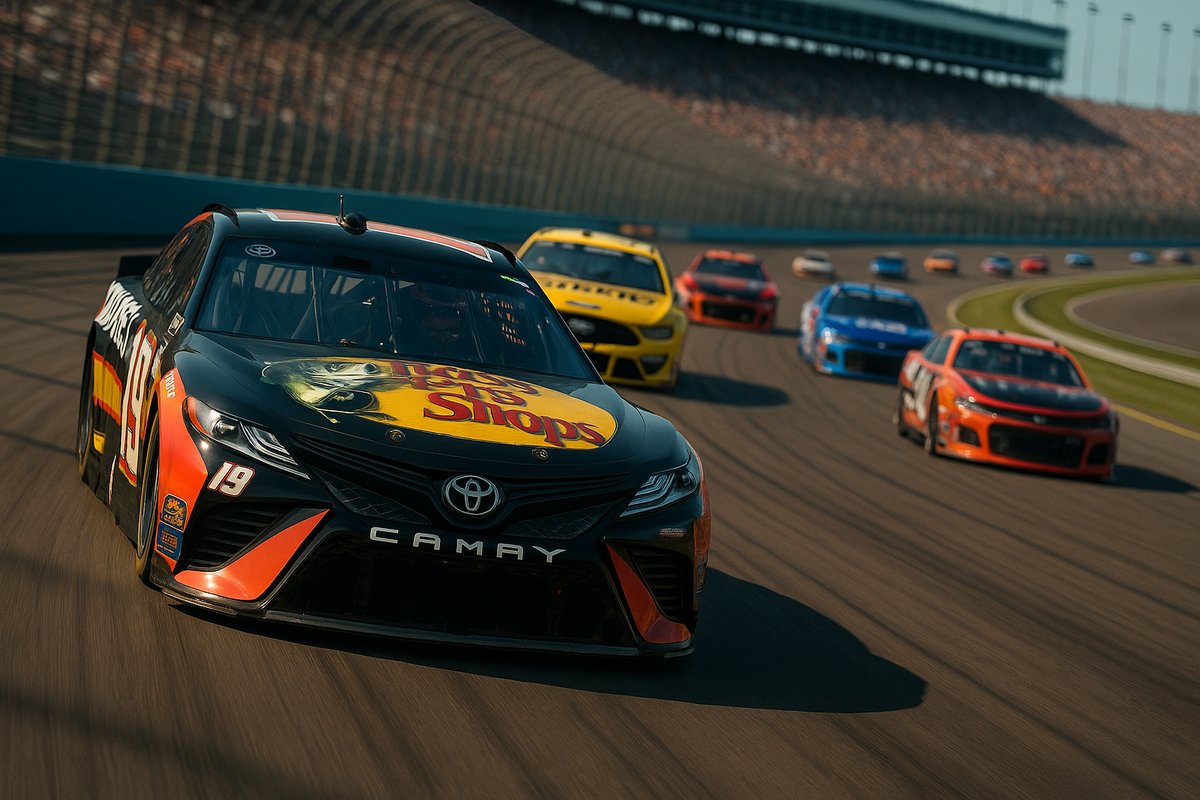
Martin Truex Jr.’s championship ledger tells a story of calculated precision layered over raw speed, with every victory lap carrying the weight of sponsor expectations and crew-chief decisions that rarely make the highlight reels. From the pit lane perspective, his 2017 title with Furniture Row Racing illustrated how a single-team operation leveraged strategic pit calls and long-run pace to outmaneuver larger organizations backed by deeper manufacturer support.
What teams don’t tell fans is that championship math extends far beyond the track. Truex’s ability to deliver consistent top finishes translated directly into renewal leverage for primary partners like Bass Pro Shops and later Toyota’s factory alignment at Joe Gibbs Racing, where sponsor visibility metrics often dictate resource allocation across the garage. His career totals—two wins in the playoffs en route to the title, multiple stage victories, and a reputation for extracting every tenth from the car—reflect not just driving talent but an acute awareness of how on-track results protect multi-year contracts.
Team strategy played a quiet but decisive role throughout. Furniture Row’s lean operation in 2017 forced a focus on qualifying aggression and fuel-mileage gambles that larger squads could afford to ignore. Those same tactics later informed JGR’s approach when Truex joined the fold, where data-sharing protocols between cars became a competitive edge rather than a liability. Sponsors noticed; activation programs tied to his consistent contention kept branding dollars flowing even in seasons without another Cup.
The 2017 championship season represents the pinnacle of Truex’s singular accomplishment in the Cup Series, and the numbers validate the narrative. That campaign saw Truex accumulate eight wins during the regular season alone, establishing him as a force to be reckoned with before the playoffs even began. His consistency was remarkable—he finished outside the top 10 just twice in the 26 regular-season races, a statistical anomaly that speaks to the reliability of both driver and machine. In the playoffs themselves, Truex maintained that level of performance, demonstrating that his regular-season dominance wasn’t a fluke but rather the product of a finely tuned operation and a driver hitting his peak at precisely the right moment.
What made that championship particularly impressive was the competitive landscape Truex had to navigate. The 2017 season featured multiple title contenders including Kyle Larson, who was arguably the most talented young driver on the circuit at that time, and Chase Elliott, who represented Hendrick Motorsports’ championship aspirations. Yet Truex managed to outpace them when it mattered most, particularly in the high-pressure environment of the 10-race playoff format where a single bad weekend can derail entire seasons. His ability to manage tire degradation across long run windows and his patience with fuel strategy became his signature tools in the toolkit.
Throughout his career, Truex has accumulated 33 Cup Series wins, placing him in rarified air among modern-era drivers. While he hasn’t accumulated multiple championships like some of his contemporaries, the consistency of his performance across nearly two decades of racing speaks to remarkable longevity and adaptability. His transition from Furniture Row Racing to Joe Gibbs Racing in 2019 could have disrupted his momentum, but instead Truex seamlessly integrated into the organization’s systems while maintaining his own approach to car setup and race execution. This flexibility—the ability to perform at a championship level across different teams, with different crew chiefs, and under varying circumstances—underscores a deeper understanding of what it takes to succeed in the modern NASCAR era.
Statistics from Truex’s recent seasons at Joe Gibbs Racing reveal a driver still capable of week-to-week competitiveness. His average starting position has consistently placed him in the top 15, while his average finishing position often ranks him among the top 10 performers in the series. More tellingly, his pole position rate indicates he hasn’t lost his qualifying edge, something many veteran drivers see diminish as the years accumulate. This suggests that Truex’s 2017 championship was built on fundamentals—an understanding of aerodynamics, tire management, and racecraft—that haven’t eroded with time.
The relationship between Truex and his crew chiefs deserves separate mention, as it fundamentally shaped his championship trajectory. Cole Pearn, who served as his crew chief during the 2017 championship run, developed a collaborative approach that gave Truex significant input into setup decisions and pit strategy. Rather than operating under a strict top-down directive model, Pearn and Truex functioned as partners in problem-solving, with both parties contributing expertise to optimize the race car’s performance. This partnership model proved particularly valuable during the playoffs, where teams have limited practice time and must make quick adjustments based on incomplete information and rapidly changing track conditions.
Examining Truex’s playoff performance across multiple seasons reveals another layer of his competitive advantage. In years when he contended for the championship, his ability to peak in the playoffs—traditionally the most pressure-filled portion of the season—demonstrates mental fortitude and consistency under stress. While other talented drivers have wilted under playoff pressure, Truex has shown an uncanny ability to deliver top-10 finishes in consecutive weeks, accumulating playoff points that provide breathing room in the elimination-style format.
His strengths also extended to specific track types. Truex developed a reputation as a particularly strong intermediate oval competitor, where his smooth driving style and precise throttle management aligned perfectly with the demands of tracks like Las Vegas Motor Speedway, Kansas Speedway, and Charlotte Motor Speedway. His ability to maintain control while running at the edge of tire grip on these 1.5-mile tracks became legendary among competitors, who often found Truex nearly impossible to pass during the final laps when tire degradation should have been working against him.
Ultimately, Truex’s legacy sits at the intersection of performance and commerce. His stats underscore a driver who maximized every opportunity to convert track position into tangible business outcomes for the organizations that backed him. Beyond the championship trophy and the wins that adorn his record, Truex’s true legacy may be his demonstration that consistent excellence, when combined with intelligent race strategy and the right team composition, can elevate a single-car or moderately-sized operation into championship contention—a lesson that continues to resonate throughout the NASCAR garage.