
Top 10 Most Iconic NASCAR Rivalries
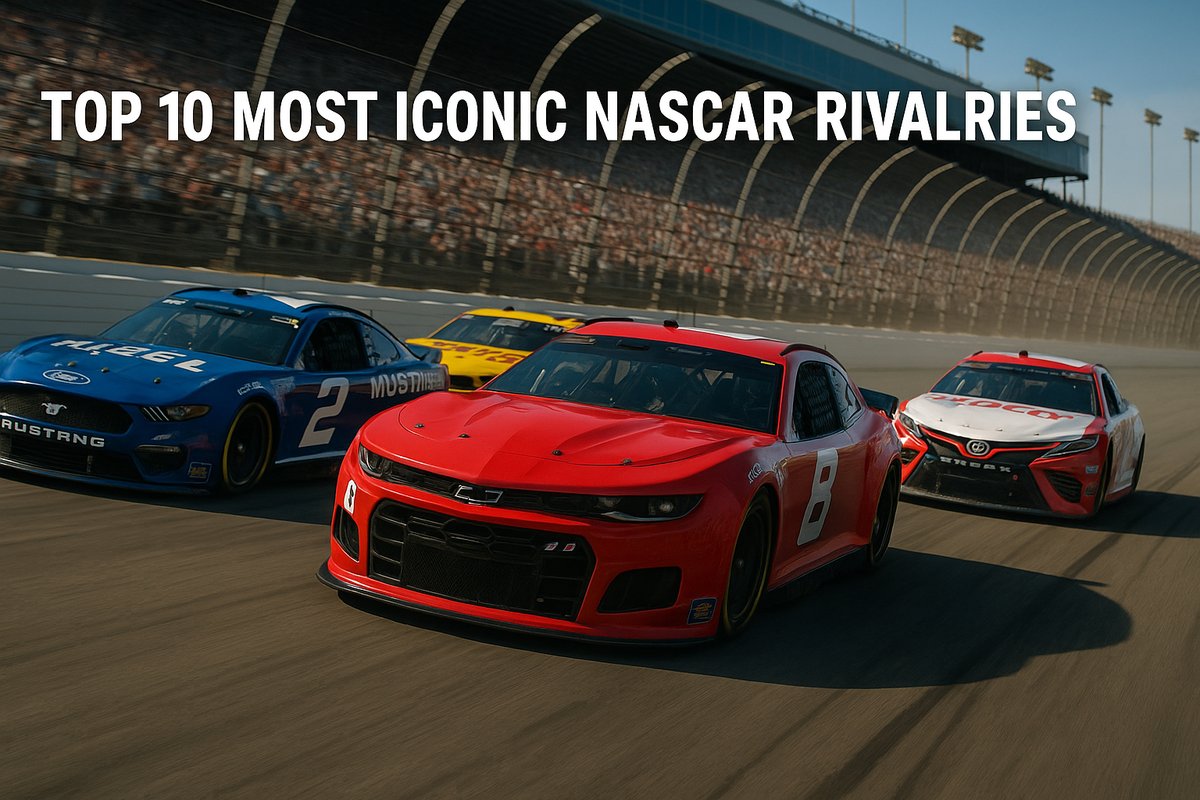
NASCAR’s most storied rivalries have always been more than on-track fireworks—they’ve driven sponsorship value, boosted television ratings, and shaped team strategies across decades of Cup Series competition. From the pit lane perspective, these clashes often reflect calculated risks in points battles and marketing alignments that keep manufacturers and primary backers engaged season after season.
Richard Petty and David Pearson formed the bedrock of modern NASCAR rivalries, combining for 105 victories between 1963 and 1977. Their superspeedway duels, particularly the 1974 Daytona 500 where Petty edged Pearson on the final lap, underscored how two drivers with strong team support could dominate while pushing each other toward record win totals. What teams don’t tell fans is that these head-to-head matchups helped secure long-term sponsor commitments by guaranteeing consistent exposure. Pearson’s silver No. 21 machine and Petty’s iconic No. 43 became synonymous with competitive excellence, and their battles across Charlotte Motor Speedway, Atlanta Motor Speedway, and Daytona International Speedway created narrative momentum that carried through entire seasons. The 1974 Daytona 500 finish remains one of the most replayed moments in NASCAR history, with Petty’s victory by mere feet cementing both drivers as legends while establishing Daytona as the sport’s marquee venue.
Cale Yarborough’s tangle with Donnie Allison in the 1979 Daytona 500 infield fight brought raw emotion to national television, lifting ratings by 50 percent the following season. That moment highlighted how personal confrontations could accelerate the sport’s commercial growth during a key transition period for team budgets and broadcast deals. The incident, which spilled into the infield grass with Allison’s brother Bobby also involved, showcased the intensity that defined this era and legitimized NASCAR as must-watch television beyond regional audiences. The fight demonstrated that rivalries fueled by genuine antagonism—not just competitive spirit—could captivate mainstream audiences and elevate the sport’s cultural relevance during the late 1970s recession when viewership needed bolstering.
Dale Earnhardt’s 1980s rivalry with Darrell Waltrip blended contrasting driving styles and delivered 11 combined wins in a championship fight that tested both drivers’ team strategies at short tracks and superspeedways. Earnhardt’s aggressive approach often clashed with Waltrip’s precision, creating incidents that sponsors leveraged for aggressive marketing campaigns at Bristol and Talladega. Their contentious relationship extended beyond the racetrack, with verbal sparring and intentional contact becoming hallmarks of their encounters. At Bristol Motor Speedway particularly, these two titans engaged in wheel-to-wheel battles that left fans breathless and broadcasters scrambling to keep up with the drama. Earnhardt’s willingness to “rattle the cage” of competitors stood in sharp contrast to Waltrip’s calculated aggression, yet both drivers accumulated championships and commanded respect from crew chiefs who had to prepare their machinery for inevitable contact.
The generational shift arrived when Jeff Gordon challenged Earnhardt’s dominance in the 1990s. Their 1995 Brickyard 400 showdown signaled changing power dynamics, and together they claimed nine of the 16 championships awarded from 1986 to 2001. From the pit lane perspective, these rivalries forced teams to refine setup strategies and protect sponsor assets during high-stakes weekends. Gordon’s youth and technological advantages with Hendrick Motorsports represented the future of NASCAR, while Earnhardt embodied the sport’s storied past. This generational clash captivated audiences because it symbolized the transition from old-school racing to the modern era. The 1995 Brickyard 400 at Indianapolis Motor Speedway, won by Gordon in just the race’s second year, illustrated how the torch was passing to a new generation of competitors who would dominate the remaining decade.
Rusty Wallace’s hard-charging battles with Earnhardt at places like Martinsville kept fans invested through the late 1980s and 1990s. Wallace finished just 12 points behind Earnhardt in the 1989 standings after repeated late-race duels, illustrating how tight points fights translate directly into sustained sponsor visibility and team resource allocation. Martinsville Speedway became the unofficial stage for these encounters, where Wallace’s short-track prowess frequently challenged the intimidator’s supremacy. The tight confines of the paperclip-shaped track meant limited passing opportunities, making Wallace’s aggressive maneuvers and Earnhardt’s defensive tactics the focal point of memorable finishes that defined entire seasons in fan memory.
Mark Martin’s near-misses against Earnhardt in the 1990s points standings represent another underrated rivalry that pushed both competitors to new levels. Martin’s consistency and technical precision troubled Earnhardt more than some fans realized, with several championship years decided by razor-thin margins. Martin’s No. 6 machine became the measuring stick against which Earnhardt’s dominance was evaluated, and their battles at Talladega—where Martin’s drafting expertise often came into play—created some of the sport’s most thrilling moments. Though Martin never captured a championship, his rivalry with Earnhardt legitimized him as an elite competitor and ensured his legacy would forever intertwine with the Intimidator’s tenure at the sport’s pinnacle.
Contemporary pairings such as Kyle Busch versus Denny Hamlin continue to generate drama through playoff clashes at Phoenix and Homestead, with the duo combining for over 150 Cup wins. Their incidents reflect ongoing team decisions around aggressive racing lines that balance championship odds against sponsor-friendly television moments. Busch and Hamlin’s rivalry carries weight because both drivers share Toyota as a manufacturer partner, adding internal complexity to their on-track battles. Their encounters in the playoffs—particularly at Phoenix Raceway where late-stage championship implications loom large—showcase how modern rivalries merge personal competitiveness with manufacturer politics and playoff seeding strategy.
Tony Stewart and Kurt Busch added volatility in the early 2000s through frequent contact that tested crew-chief strategy under pressure. Stewart’s unpredictability and Busch’s hotheaded responses created a combustible mixture that sometimes overshadowed pure racing merit but undeniably drove viewership spikes. Their collisions at intermediate tracks became appointment television, with fans tuning in specifically to witness whether these volatile competitors could coexist on the same track.
Jimmie Johnson and Brad Keselowski engaged in fierce battles throughout the 2010s, particularly at intermediate tracks where horsepower advantages became crucial. Johnson’s six championships and Keselowski’s aggressive approach created natural friction, with their encounters at Kansas Speedway and Charlotte Motor Speedway producing some of the decade’s most heated moments. These matchups kept manufacturers and primary sponsors aligned by delivering the compelling narratives that drive viewership and long-term partnerships, ensuring that NASCAR rivalries remain central to the sport’s commercial and competitive identity.
Sources
- NASCAR.com News & Media – Official NASCAR news, race results, and historical coverage
- ESPN NASCAR – Comprehensive NASCAR coverage, standings, and rivalry analysis
- Motorsport.com NASCAR – International motorsport news and NASCAR feature stories
- NASCAR.com Articles Archive – In-depth features on NASCAR history and rivalries