
What Makes Talladega Superspeedway So Dangerous
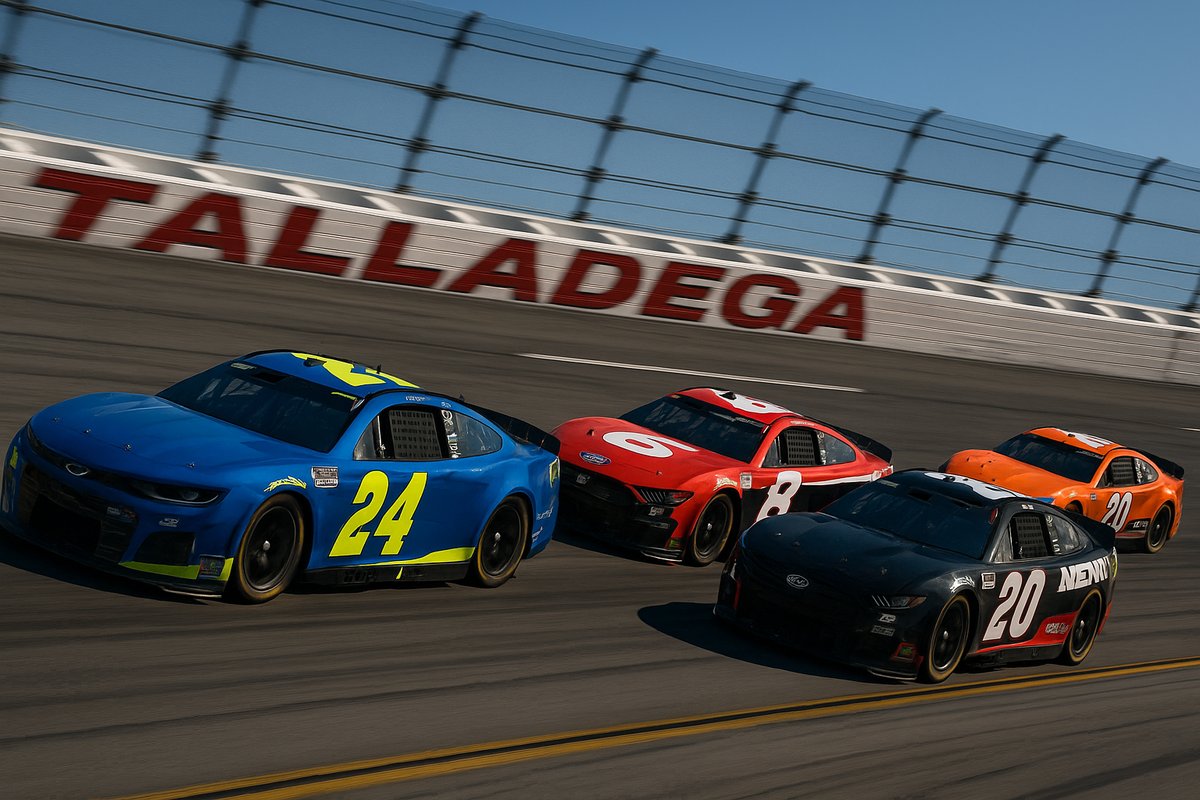
Talladega Superspeedway remains one of the most high-stakes venues on the NASCAR Cup Series calendar, where 2.66 miles of tri-oval and banking up to 33 degrees in the corners routinely push qualifying speeds past 200 mph. From the pit lane perspective, the combination of raw velocity and pack drafting turns every race into a calculated gamble that directly affects team budgets, sponsor exposure, and championship positioning.
The track’s massive layout lets cars stay wide open through the turns, producing average speeds often above 180 mph even under tapered-spacer rules. What teams don’t tell fans is that this design forces crew chiefs to balance outright speed against the very real possibility of a 20-car wreck that wipes out weeks of sponsor activation planning. Long straightaways encourage nose-to-tail trains three and four wide, where one small lift can cascade through an entire field and erase the ROI that primary partners expect from superspeedway television time.
Drafting is both the strategic backbone of Talladega racing and its greatest liability. Cars running inches apart gain critical aerodynamic boosts, yet the same tight formation leaves almost no margin when turbulence hits. The result is the multi-car chaos known as The Big One, capable of launching vehicles into the fence at speeds that still test the limits of current safety technology. Business-wise, these incidents spike viewership and social engagement, but they also spike repair costs and lost marketing impressions for teams that had aligned major partners around a strong finish.
Over the years the venue has produced defining moments, from Bobby Allison’s 1983 airborne crash that prompted restrictor plates to Carl Edwards’ 2010 fence impact that drove immediate upgrades to catch fencing across the series. More recent examples, including the 2020 incident involving Ryan Newman at a similarly configured track, remind sponsors and team owners alike that even the best-prepared organizations can see six months of branding collateral reduced to a highlight reel in seconds.
NASCAR’s investments in SAFER barriers, stronger fencing, and head restraints represent real safety progress, yet they cannot fully neutralize the kinetic energy generated by 40 cars traveling above 200 mph in formation. From a commercial standpoint, these upgrades protect the long-term viability of superspeedway events that deliver some of the sport’s highest television ratings, but they also underscore the ongoing tension between spectacle and risk management that every charter team must navigate.
Veteran drivers often describe Talladega as the place where preparation meets chance, noting the mental load of managing draft position while scanning for sudden trouble. Newer competitors quickly learn that calculated aggression pays dividends here, provided the strategy aligns with both points goals and sponsor deliverables. Experience at the track remains irreplaceable, as no simulator fully captures the split-second decisions that determine whether a team leaves with a trophy or a tow-truck bill.
The aerodynamic characteristics of Talladega create a unique challenge that extends beyond what drivers face at other superspeedways. The tri-oval shape, combined with the specific banking angles, produces what engineers call a “slingshot effect” on the backstretch. This phenomenon allows a trailing car to gain momentum and potentially pass the leader in mere seconds, but the speed differential required to execute this maneuver often forces drivers into windows of extreme vulnerability. A mistimed slingshot attempt can leave a car exposed to turbulent air, causing it to lose grip and trigger the cascade failures that lead to wrecks. Teams spend hours in prep meetings analyzing data from previous races, calculating the exact mph gap needed to time a pass without overcommitting and becoming a victim of their own aggression.
Pit strategy at Talladega adds another layer of complexity that distinguishes it from other tracks. The extended length means fuel mileage calculations are tighter, and a crew chief’s decision on when to pit for tires and fuel can determine whether a driver finishes with a fresh set late in the race or limps home on worn rubber during a crucial restart. The pit lane itself is narrow relative to the track size, creating congestion during multi-car stops that can cost teams critical seconds. Combine this with the fact that track position is fluid at Talladega—a driver can lose spots during a pit stop and regain them through aggressive drafting in just a few laps—and crew chiefs must weigh every decision against probability models built from years of race history.
Weather conditions at Talladega also play a more pronounced role than at many other venues. The track’s elevation and geographic location in central Alabama mean that afternoon thunderstorms can develop quickly, potentially shortening races or altering strategy mid-event. Track temperature swings throughout race day affect tire grip and fuel consumption, forcing teams to adjust setups during practice and qualifying to prepare for evening racing conditions. A setup optimized for a cool morning session may be dangerously loose by evening, and teams that fail to account for these variations often find themselves struggling for grip when it matters most.
The psychological element of Talladega racing cannot be overstated. Drivers must maintain focus and composure while operating at the absolute edge of vehicle performance, knowing that a single miscalculation or unexpected circumstance could end their day in a wall. This mental toll affects decision-making as races progress—drivers grow fatigued and may become either overly cautious or recklessly aggressive, both of which increase crash probability. Crew chiefs and spotters play crucial roles in managing driver psychology, offering calm instruction and strategic guidance that keeps pilots from panic-driven errors when chaos erupts around them.
Key details continue to frame the conversation: Talladega is the longest track on the schedule, has hosted more than 100 Cup races since 1969, and consistently ranks among the leaders in caution frequency due to pack incidents. Qualifying speeds have topped 212 mph in recent years, and average race speeds frequently exceed 170 mph. More than 30 drivers have visited victory lane, though repeat winners remain rare because of the elevated crash rate. The 2010 Edwards incident directly led to fencing improvements system-wide. Additionally, restrictor plate specifications have been adjusted multiple times over the decades as engineers work to balance competitive racing with safer closing speeds, yet the fundamental danger of pack racing at Talladega remains a permanent fixture of the event.
Ultimately, Talladega’s unique demands keep it central to the business of NASCAR, delivering both the drama sponsors crave and the operational challenges teams must absorb every time the green flag drops.