
Denny Hamlin Path to NASCAR Success
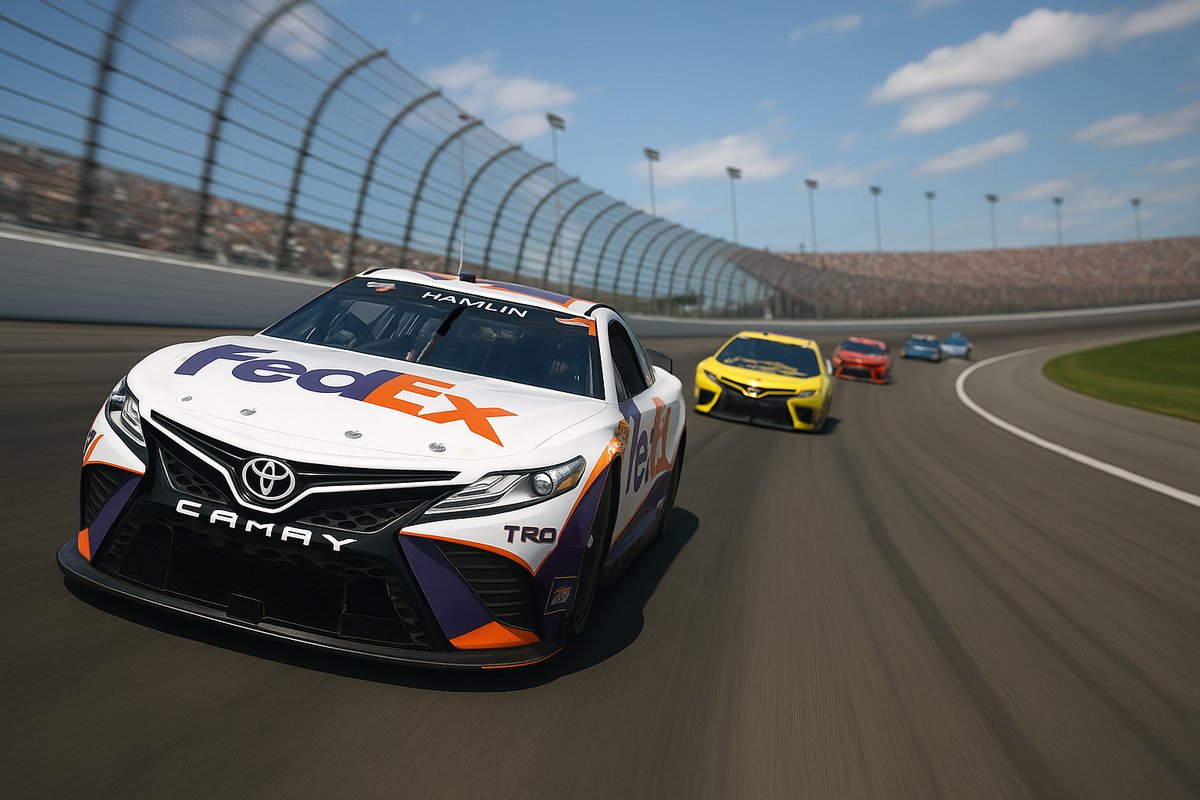
Denny Hamlin’s ascent through NASCAR reflects the kind of calculated progression that team owners and sponsors value most. From those early go-kart laps in Virginia to locking down a long-term role at Joe Gibbs Racing, his career shows how raw talent paired with smart timing can deliver sustained commercial and on-track returns. What teams don’t tell fans is that consistency like Hamlin’s often matters more to sponsors than flashy wins alone, because it keeps the brand visible week after week.
Born November 18, 1980, in Tampa and raised in Chesterfield, Virginia, Hamlin got his start when his father put him in a kart at age eight. Those local short tracks became the classroom where he learned tire management and setup nuances that still pay dividends in Cup strategy sessions today. From the pit lane perspective, that foundation explains why he so rarely overdrives a car on race day. Growing up in central Virginia placed him near some of the most competitive short-track racing in the country, where he competed against future NASCAR talent and learned the discipline required to succeed at higher levels. His father’s support extended beyond simply entry fees; it included exposure to mechanics and crew members who understood how to extract performance from limited equipment—a skillset that translates directly to modern Cup Series strategy where pit crew execution and driver feedback loops determine outcomes.
His move into the ARCA Menards Series opened doors at Joe Gibbs Racing, which then placed him in the Xfinity Series from 2004 through 2006. Multiple wins and poles during that stretch convinced the organization he could handle the premier series without the usual growing pains. Mentorship from veterans such as Tony Stewart accelerated the process, giving Hamlin the political capital inside the garage that new drivers often lack. Sponsors notice these accelerated timelines because they reduce the risk of a driver washing out before the marketing contracts mature. The Xfinity Series stint proved particularly valuable because it allowed Hamlin to familiarize himself with tracks, build relationships with crew chiefs and engineers, and develop the communication style that would later define his partnership with long-time crew chief Mike Gustafson. Unlike drivers who jump directly to Cup competition, Hamlin’s measured progression meant he entered the elite series with track-specific knowledge and established credibility within the organization.
Hamlin debuted in Cup at Kansas in 2005 and grabbed his first win at Pocono the next season. Since then the No. 11 Toyota has produced more than 50 victories, three Daytona 500 triumphs, and repeated deep playoff runs. His 2019 and 2020 Daytona 500 wins, along with strong records at Richmond, Darlington, and Phoenix, highlight how JGR’s engineering and pit strategy align with his preference for clean air and long-run speed. The 2020 Daytona 500 victory, in particular, showcased his ability to execute under maximum pressure in NASCAR’s most watched race, capitalizing on late-race restarts and fuel mileage calculations. Those Daytona 500 wins carry outsized significance in NASCAR culture and sponsor value; winning stock car racing’s marquee event three times places Hamlin among an elite group of modern drivers and provides marketing material that extends far beyond the sport itself.
Off the track, his stake in 23XI Racing alongside Michael Jordan adds another revenue stream and positions him as both driver and equity holder—an arrangement sponsors increasingly favor because it signals long-term commitment. The 23XI partnership, launched in 2021, represented a watershed moment in Hamlin’s career. Rather than simply being an employee of an existing organization, Hamlin became a business owner with skin in the game. This ownership stake creates incentives aligned with team success that go beyond personal performance metrics. The presence of Michael Jordan as co-founder elevated the team’s profile nationally, attracting mainstream media attention and corporate sponsors accustomed to basketball marketing rather than traditional NASCAR sponsorship models. For Hamlin personally, this arrangement diversifies his income and protects his future earnings against the unpredictability of on-track performance or team ownership decisions beyond his control.
His track record at superspeedways deserves particular attention, as these venues represent some of NASCAR’s most important events and most unpredictable competitions. Hamlin has won poles at Daytona and Talladega, demonstrating that his single-lap speed is not limited to short-run scenarios. His three Daytona 500 victories came in different seasons and under different conditions—the 2016 win, the 2019 win, and the 2020 win each required different strategic approaches and adaptations. This adaptability across multiple years and competitive environments suggests that Hamlin’s success is not dependent on a single car setup or team configuration, but rather reflects genuine skill at reading traffic, managing fuel, and capitalizing on opportunities. Superspeedway competitiveness also carries sponsorship value because those races generate national television ratings and mainstream press coverage that exceed typical Sunday afternoon events.
Key career markers include over 50 Cup wins, multiple Xfinity victories before the full-time Cup move, consistent top-five championship finishes, superspeedway poles, co-ownership of 23XI, career earnings topping $100 million, and playoff appearances in nearly every season since the format began. These numbers translate directly into sponsor leverage; Hamlin’s reliability lets partners plan multi-year activations without worrying about sudden performance drops. The consistency of playoff appearances reflects not just individual performance but also a driver’s durability and ability to perform when stakes are highest. In the playoffs, where single-race eliminations reward consistency and penalize mistakes, Hamlin has demonstrated the mental fortitude and strategic awareness to advance multiple rounds repeatedly. This playoff longevity suggests that his success extends beyond regular-season points accumulation to genuine performance elevation when competition intensifies.
Richmond Raceway holds special significance in Hamlin’s career, with multiple victories at his regional track that has served as a testing ground for new setups and tire compounds. A driver’s performance at tracks near his home often reflects deep familiarity and the ability to communicate track-specific details effectively with engineering. Similarly, his success at Darlington—historically one of NASCAR’s most challenging and technical tracks—highlights his commitment to setup work and willingness to learn from difficult racing conditions. Track-specific competitiveness builds driver reputation within the garage and among competitors who recognize when a driver has truly mastered a particular venue.
From the pit lane perspective, his continued competitiveness at Joe Gibbs Racing keeps both the No. 11 program and the 23XI operation attractive to new partners. Hamlin turned early passion into a durable business model that still has room to grow. Looking forward, his role in 23XI’s expansion and the potential for additional car entries means his influence on NASCAR’s competitive landscape continues to expand. Whether as a driver, team owner, or brand ambassador, Hamlin’s trajectory demonstrates how sustained excellence and smart business decisions create opportunities that transcend any single role or contract. His path offers a template for younger drivers aspiring to longevity in a sport where many careers peak quickly and fade. By prioritizing consistency, building relationships, and diversifying revenue streams, Hamlin has constructed a career that generates value across multiple dimensions of professional racing.