
How Broadcast Teams Cover Cup Events
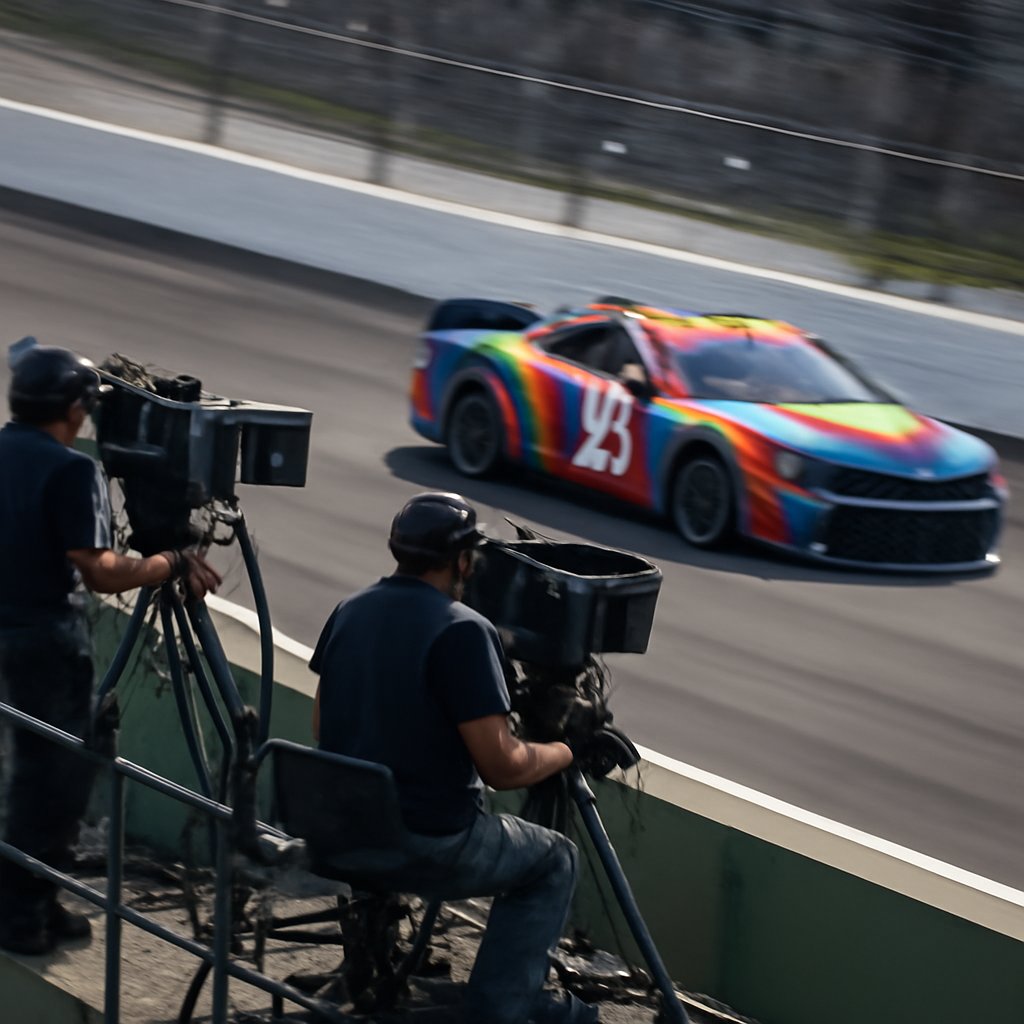
Broadcast coverage of NASCAR Cup Series events is a high-stakes production play that blends technical precision with the commercial realities of sponsor visibility and team positioning. From the pit lane perspective, what networks rarely highlight is how every camera angle and graphic package is calibrated to keep flagship backers like those on the hoods of Denny Hamlin and Chase Elliott front and center for the full green-flag window.
Preparation for these telecasts begins weeks ahead, with producers and directors poring over track guides, recent race results, and driver profiles to map storylines that align with championship narratives and manufacturer rivalries. Camera placements at venues such as Talladega and Bristol are scouted not only for drafting drama but also to capture pit-stop sequences where crew-chief decisions and sponsor branding intersect. Weather data and historical caution trends factor into contingency planning, ensuring seamless shifts that protect advertising inventory. Late-night rehearsals by talent focus on points standings and past winners, building the foundation for commentary that educates casual viewers while reinforcing the business case for sustained network investment in the 36-race season.
The technical infrastructure supporting Cup Series broadcasts represents a significant investment in equipment and personnel. Each broadcast center operates with redundant systems to ensure uninterrupted coverage—backup cameras, secondary audio feeds, and fail-safe switching mechanisms are standard protocol. Mobile production trucks stationed at each venue contain state-of-the-art editing bays, graphics workstations, and communication hubs that coordinate with the main broadcast truck. These mobile units house color commentators, pit reporters, and technical directors who manage real-time decisions affecting millions of viewers. The fiber-optic networks connecting these systems to the broadcast center allow for instantaneous data transmission, enabling replay packages to air within seconds of on-track action.
Network selection of which races receive prime-time slots versus cable or streaming distribution depends partly on historical viewership patterns and championship implications. Marquee events like the Daytona 500 and the Championship race at Phoenix Raceway command broadcast television placement, while mid-season races at tracks like Darlington or Kansas Speedway may air on cable partners like Fox Sports 1 or USA Network. This strategic scheduling reflects audience expectations and advertising rates, with networks leveraging their NASCAR portfolio to cross-promote other programming and build year-round sports coverage narratives.
Once the green flag drops, the operation moves into coordinated execution across the booth, pit road, and mobile units. Play-by-play calls pair with analyst breakdowns of tire strategy and fuel mileage, while pit reporters deliver real-time updates on adjustments that can swing results—and the associated sponsor exposure—dramatically. Directors in the truck juggle aerial shots, onboard feeds from cars like Kyle Busch’s, and side-by-side comparisons to maintain engagement, all while monitoring social sentiment that can influence next-week’s promotional packages. What teams don’t tell fans is that these live cutaways are also negotiated touchpoints for partners seeking maximum logo time during high-viewership restarts.
The role of pit reporters has evolved significantly over the years. These journalists are stationed in the garage and pit road areas, maintaining constant communication with team members to gather intelligence on setup changes, fuel strategy, and mechanical issues. Their ability to translate technical jargon into accessible commentary helps viewers understand the complexity of modern Cup Series racing. Pit reporters also serve as the human connection to teams, conducting brief interviews during caution periods that reveal driver mindset and crew-chief philosophy. The best pit reporters build relationships with multiple teams throughout the season, earning trust that translates to more candid, insightful exchanges during critical moments.
Onboard camera technology has revolutionized how fans experience Cup racing. Multiple camera angles from inside driver cockpits provide unprecedented access to steering inputs, G-force reactions, and driver communication with spotters. These feeds are particularly valuable during tight racing situations, allowing viewers to see how drivers navigate traffic and make split-second decisions. High-speed camera systems capture pit-stop sequences frame-by-frame, revealing the choreography of four-person crews changing tires in under 13 seconds. Slow-motion replays of contact, mechanical failures, and strategic moves provide analytical depth that enriches viewer understanding.
Graphics packages have become increasingly sophisticated, with real-time data visualization showing fuel mileage projections, tire wear indicators, and gap-to-leader measurements. Networks employ statisticians and data analysts who feed live information into graphics systems, enabling commentators to discuss championship scenarios with specific numbers. Some broadcasts now include augmented-reality graphics that overlay track maps, driver histories, and sponsor logos directly onto camera feeds, creating visually compelling presentations that engage diverse audience demographics.
Social media integration has transformed how networks engage with audiences during broadcasts. Real-time Twitter feeds, hashtag campaigns, and fan polls appear on-screen, creating a participatory viewing experience. Networks monitor trending topics related to races, drivers, and on-track incidents, using viewer sentiment to inform post-race coverage angles. Fantasy NASCAR platforms integrated into broadcast promotions encourage deeper fan engagement and provide networks with valuable audience demographic data.
Post-race segments shift to recaps that quantify final results, caution counts, and championship implications at circuits like Watkins Glen and Phoenix Raceway. Interviews with podium drivers often surface the strategic calls that paid off, framed against updated driver profiles and upcoming schedule previews. These segments typically include highlight reels edited to emphasize the most dramatic moments—last-lap passes, strategic pit stops, or unexpected mechanical failures. Producers craft narratives that connect race outcomes to broader championship storylines, helping viewers understand how each event impacts the points battle.
Technological upgrades—augmented-reality graphics, 4K cameras, and AI-assisted highlights—allow networks to deliver polished content even during delays, protecting the premium ad rates that underwrite the entire production. Some networks have begun experimenting with virtual reality options and multi-angle streaming capabilities, allowing tech-savvy viewers to customize their broadcast experience. These innovations require investment in infrastructure and talent development, with networks competing to offer the most immersive and interactive Cup Series coverage available.
Race-day scheduling and logistics present unique challenges for broadcast teams. Many Cup events run three to four hours, requiring sustained focus from talent and production staff. Weather delays can extend broadcasts unpredictably, forcing directors to fill dead air with supplemental programming, interviews, or historical retrospectives. Networks maintain extensive libraries of past race footage and driver profiles to draw upon during these situations, ensuring viewers remain engaged even when on-track action is suspended.
Key metrics underscore the scale: Cup broadcasts deploy more than 100 cameras per event, reach average prime-time audiences exceeding 3 million households, and rely on over 50 on-site personnel. Superspeedway events generate roughly 20 percent more cautions, prompting dynamic adjustments, while driver-profile segments average 90 seconds and track guides cover more than 20 venues annually. Instant-replay volume has risen 40 percent in recent years thanks to fiber-optic infrastructure. The production costs for a single Cup Series broadcast exceed $1 million, reflecting the complexity and scale of modern sports television.
International distribution adds another layer to broadcast operations. Feed packages tailored for European and Asian markets require different commentary, graphics localization, and scheduling coordination. Some international broadcasters produce their own commentary over baseline video feeds, necessitating clean camera work that accommodates voice-over production. This global reach has expanded NASCAR’s commercial footprint and introduced international sponsors to Cup Series coverage.
In the end, the broadcast ecosystem converts raw competition into a commercially viable product that keeps sponsors engaged and teams strategically positioned for the next points battle. The intersection of storytelling, technical execution, and business strategy creates the polished product that reaches millions of households every race weekend. Behind every seamless transition, compelling narrative, and perfectly timed replay lies months of planning, split-second decision-making, and professional expertise from broadcasters who understand that Cup Series racing is as much about creating compelling television as it is about crowning a champion.