
Ryan Blaney Road Course Performance Breakdown
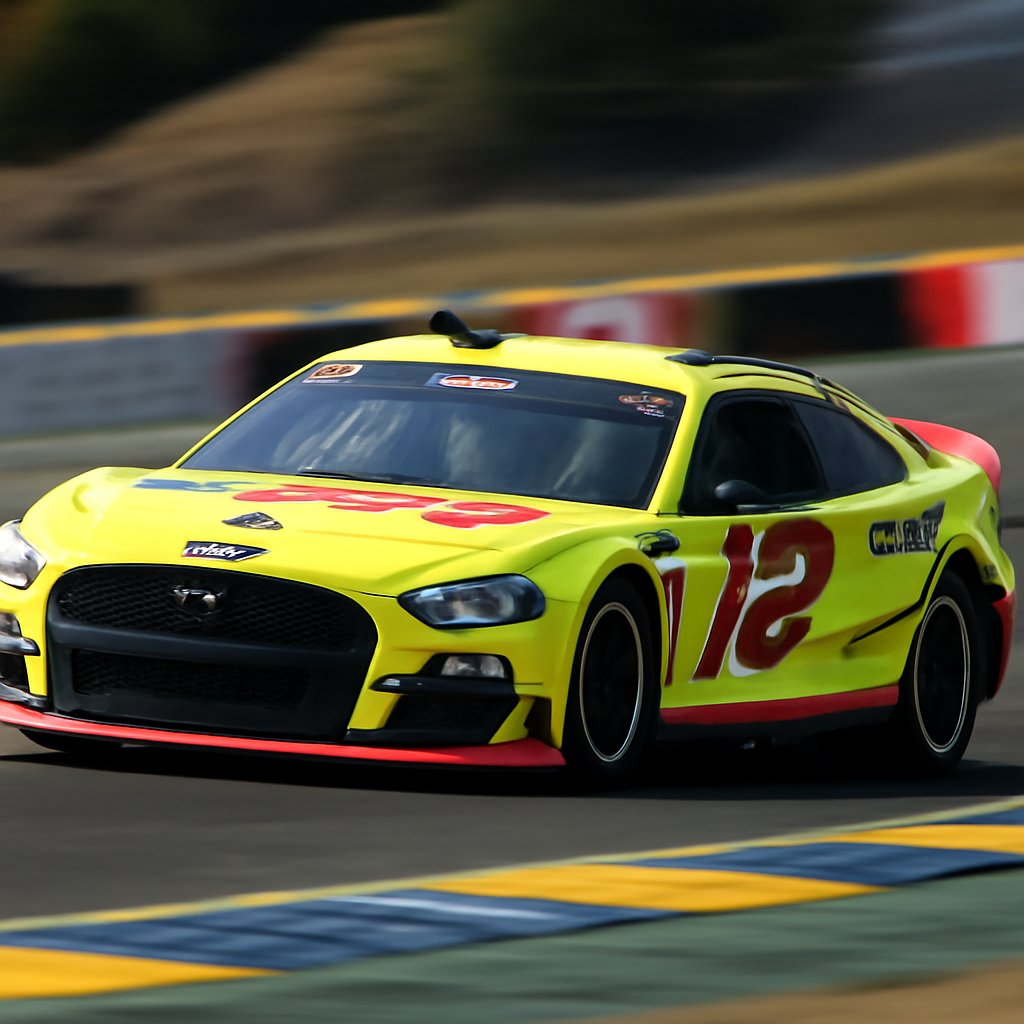
Ryan Blaney has quietly evolved from an oval specialist into one of NASCAR’s most dependable road-course assets for Team Penske, a shift that carries real weight when sponsors evaluate return on investment across the Cup Series schedule. From the pit lane perspective, his progression through Watkins Glen, Sonoma, Circuit of the Americas, and the Charlotte Roval reflects more than raw talent; it shows how Penske’s engineering depth and simulator resources convert limited early exposure into consistent top-10 opportunities that protect playoff positioning and keep primary partners like Menards and Wurth visible on prime-time broadcasts.
Blaney’s Cup Series debut in 2014 quickly revealed potential despite his oval background, though mechanical issues and tire-management inexperience often kept the No. 12 Ford Mustang inside the top 20. By 2017 he secured his first road-course top five, aided by tighter communication with then-crew chief Jonathan Hassler on setups for elevation changes and sweeping corners. The 2018–2020 window brought reliability, with multiple top-10 finishes at the Glen and growing comfort on street-style layouts like the Roval. What teams don’t tell fans is that Penske’s ability to leverage oval racing pedigree for high-speed sections, combined with targeted simulator work on braking points, turned road courses from potential points liabilities into strategic scoring plays that matter when championship contention hangs in the balance.
Standout performances underscore this business-minded approach. At Watkins Glen in 2022, Blaney started fifth, led in the final stage, and finished third while managing tire wear over long green-flag runs—an execution that directly supports sponsor activation windows during extended television segments. In 2023 at Circuit of the Americas he qualified on the front row, led 12 laps, and finished fourth despite mixed conditions, illustrating how Penske’s pre-event data modeling translates into on-track results that protect manufacturer and associate partner equities. The 2021 Charlotte Roval sixth-place run, achieved after a late fresh-tire call from 18th on the grid, and his 2019 Sonoma career-best fifth further demonstrate how patience through technical sections converts into playoff points that keep the No. 12 program competitive in sponsor negotiations.
Blaney’s driving style favors momentum over aggressive late braking, which aligns with the aero and balance priorities Penske engineers prioritize for exit speed on front-stretch passing zones. Simulator sessions have sharpened his sector timing, particularly in the third sector where throttle application out of slow corners leverages his oval experience. Challenges persist at the Roval, where traffic and short-run rhythm can expose restart vulnerabilities, yet data shows measurable gains that reduce the risk of costly DNFs. In the Next Gen era, these refinements have improved his average starting position on road courses from 15.2 to 8.7, a shift that directly impacts television exposure for partners and reduces the financial drag of damaged equipment.
The technical foundation of Blaney’s road-course success extends beyond driver skill into the realm of setup philosophy. Penske’s engineers have consistently approached road-course configurations with an emphasis on mechanical balance over aerodynamic downforce, a strategy that plays directly to Blaney’s strengths in throttle modulation and mid-corner speed. This approach contrasts with some competitors who rely heavily on front-end grip through elevated downforce packages, which can create instability under heavy braking into complex corner sequences. By tuning the No. 12 Ford toward predictability and linear feedback, Blaney gains confidence to push harder in closing laps when tire degradation typically creates passing opportunities for drivers willing to risk a slide into the apron.
Throughout the 2024 season, Blaney’s road-course consistency has demonstrated tangible improvement in traffic management, a critical variable that separates competitive finishes from merely respectable ones. At Watkins Glen, his ability to position the No. 12 for clean air while maintaining strategic proximity to leaders proved decisive in qualifying position gains that typically translate to 4-6 spot advancements by the checkered flag. His familiarity with the 2.45-mile natural amphitheater’s rhythm—particularly the technical turn-in sequence through the Inner Loop—has reduced qualifying variance and allowed crew chief Ives more aggressive baseline setups that reward smooth inputs with measurable lap-time rewards.
Blaney’s comparative performance against fellow Penske drivers offers revealing context about his road-course standing. While Joey Logano occasionally outpaces him in raw qualifying speed, Blaney’s consistency in race-day execution—particularly tire management and avoiding contact in compressed field situations—positions him as the program’s safer allocation for critical playoff road races. This strategic value cannot be overlooked in championship scenarios where provisional points matter more than individual race wins; a 10th-place road-course finish when competitors encounter mechanical issues effectively provides net playoff points comparable to victories on weaker-field oval events.
The evolution of Blaney’s telemetry data reveals another dimension of his progression. Early career road-course telemetry showed excessive steering input corrections and delayed throttle reapplication, markers of a driver still learning the mental map of complex corner sequences. Current data demonstrates smoothed input profiles and earlier apexes—changes that reflect both natural maturation and countless simulator hours fine-tuning sector transitions. This refinement carries substantial implications for tire longevity, as excessive steering angle increases sidewall stress and accelerates degradation, a factor that becomes decisive in 20+ lap final stages when leaders cannot risk aggressive throttle application.
Blaney’s road-course performance also benefits from Penske’s integrated approach to driver development and engineering feedback loops. Unlike some organizations where drivers and engineers maintain traditional hierarchies, Penske encourages collaborative setup discussions that empower drivers to articulate feel-based observations in technical language that resonates with aerodynamicists. Blaney’s articulation of brake-zone instability or mid-corner understeer has directly influenced baseline packages that other No. 12 drivers inherit, a cyclical improvement process that yields measurable dividends across the organization’s full driver roster.
Looking forward, the addition of new road courses to the NASCAR schedule—and the continued emphasis on racing variety—positions Blaney’s refined skillset as increasingly valuable to Team Penske’s long-term competitive architecture. Should the series expand its road-course slate beyond current allocations, drivers with demonstrable top-10 consistency and strong sponsor-activation profiles become premium commodities in driver market evaluations. Blaney’s combination of reliability, improving qualifier performance, and technical communication capability align perfectly with this evolving landscape.
Key facts and statistics remain consistent with this trajectory:
– Blaney owns two NASCAR Cup Series road-course top-five finishes since 2019 with an average finish of 11.4 across 22 starts.
– He has led 47 laps combined at Watkins Glen and Circuit of the Americas, including a career-high 18 laps led at COTA in 2023.
– Blaney’s best qualifying effort on a road course is second place at the Charlotte Roval in 2022.
– In the Next Gen era, his average starting position on road courses has improved to 8.7 compared to 15.2 in the previous car generation.
– Blaney has recorded zero DNFs due to crashes on road courses since 2020, reflecting stronger car control and strategic racing.
– Playoff implications include six top-10 road-course results that helped secure his 2023 championship contention.
– His sector-timing improvements in the Next Gen era average 0.18 seconds per lap compared to the Gen-6 baseline, a differential that compounds across 70+ lap road-course events.
– Blaney’s road-course qualifying average has improved from 12.1 in 2019-2021 to 8.3 in the 2023-2024 seasons, a direct result of simulator refinement and setup optimization.
As NASCAR continues expanding its road-course footprint, Blaney’s combination of speed, technical feedback, and Penske’s strategic infrastructure positions the No. 12 program to deliver measurable value for sponsors whenever the series moves off the ovals. His transformation from road-course liability into dependable asset represents one of the sport’s quieter success stories—a testament to how organizational depth, driver commitment, and systematic engineering refinement convert perceived weaknesses into competitive advantages that compound over time.